5 Best Laptops for Overwatch 2 2026 (Latest Patch)
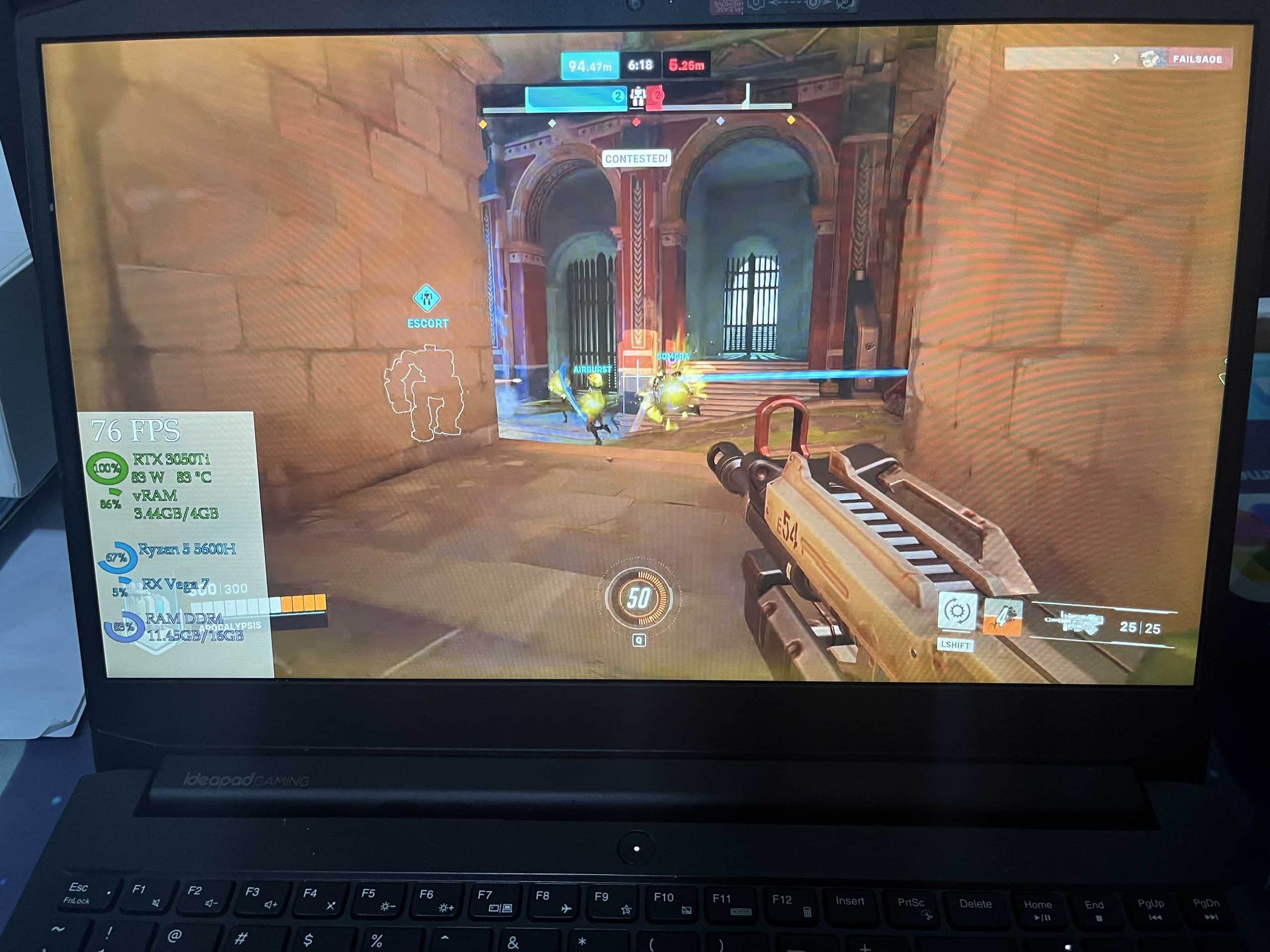
I’ve played Overwatch since its first release in 2016 and, having gone through all kinds of laptops, I’ve never really had a problem with lag or stuttering as long as I adjusted the settings properly.
That shouldn’t be surprising. Blizzard has always made its games pretty scalable hardware-wise so they can reach as many players as possible.
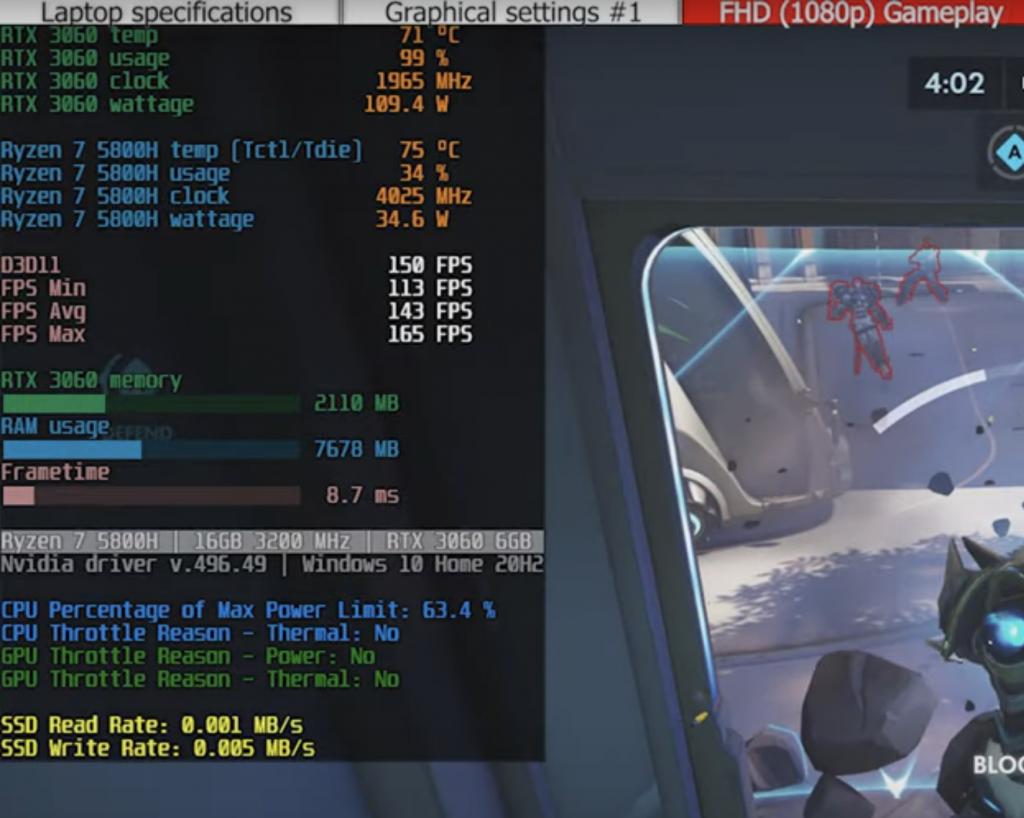
This table still gives you a good idea of how Overwatch scales across different levels of laptop hardware:

*Note that Blizzard even dropped the “2” from the name in 2026, so Overwatch 2 is officially just called Overwatch again.
To summarize it…
- For High or Ultra settings, an older GTX 1650 / RTX 2050 / RTX 3050 laptop already has enough GPU power for a very good experience.
- If you’re after 144 FPS+ at Ultra/Epic settings FHD, the RTX 4050 is basically the sweet spot now. We’ve seen RTX 4050 laptops push 200+ FPS at Ultra settings, so you really don’t need anything much faster for Overwatch alone. An RTX 5050 is the newer 8GB option and makes sense if the price difference is small, while an RTX 5060 is better suited for 1440p gaming or much more demanding games.
- If you want the BEST VISUAL experience for Overwatch. In other words, something that can comfortably push a 144Hz or 165Hz display at QHD with Ultra/Epic settings, even during hectic team fights…then you’ll need an 8GB vRAM GPU such as the RTX 5070.
- If you don’t mind playing at Low settings at 1080p, even lower-end graphics can give you around 40+ FPS.
- With weaker integrated graphics, dropping the resolution to 720p can make the game much easier to run.
Why?
Hardware requirements are still pretty low compared with most modern shooters.

The game is still playable without a dedicated GPU, especially on newer Intel Arc, Iris Xe and AMD Radeon integrated graphics.
You’ll have to lower settings and possibly resolution, but Overwatch scales surprisingly well.
If you’re relying on integrated graphics, 16GB RAM is strongly recommended. Memory bandwidth makes a big difference because the iGPU shares system memory with the CPU. More details in my post: 8GB vs 16GB for integrated graphics.
Anyways…
We’ll go through all kinds of options here. I’ll also show you benchmark videos of how the game performs on different hardware—some recorded by myself and others from different channels when I don’t have the exact laptop available.
Top 5 Best Laptops For Overwatch
All of the following laptops have enough GPU power for competitive framerates. Even the cheaper ones can push 100+ FPS if you adjust the settings.
A brief summary:
#1: More powerful option for 1440p/QHD gaming and more demanding games. Best Visual Experience and performance.
#2: Cheapest dedicated-GPU option. Just right for 1080p Overwatch.
#3: Alternative to Laptop #1 if the price/specs are better.
#4: Best bang for your buck. RTX 4050-class performance is basically ideal for high-refresh-rate Overwatch.
#5: Portable laptop with a dedicated GPU. Better choice if you also need something light enough for school or work.
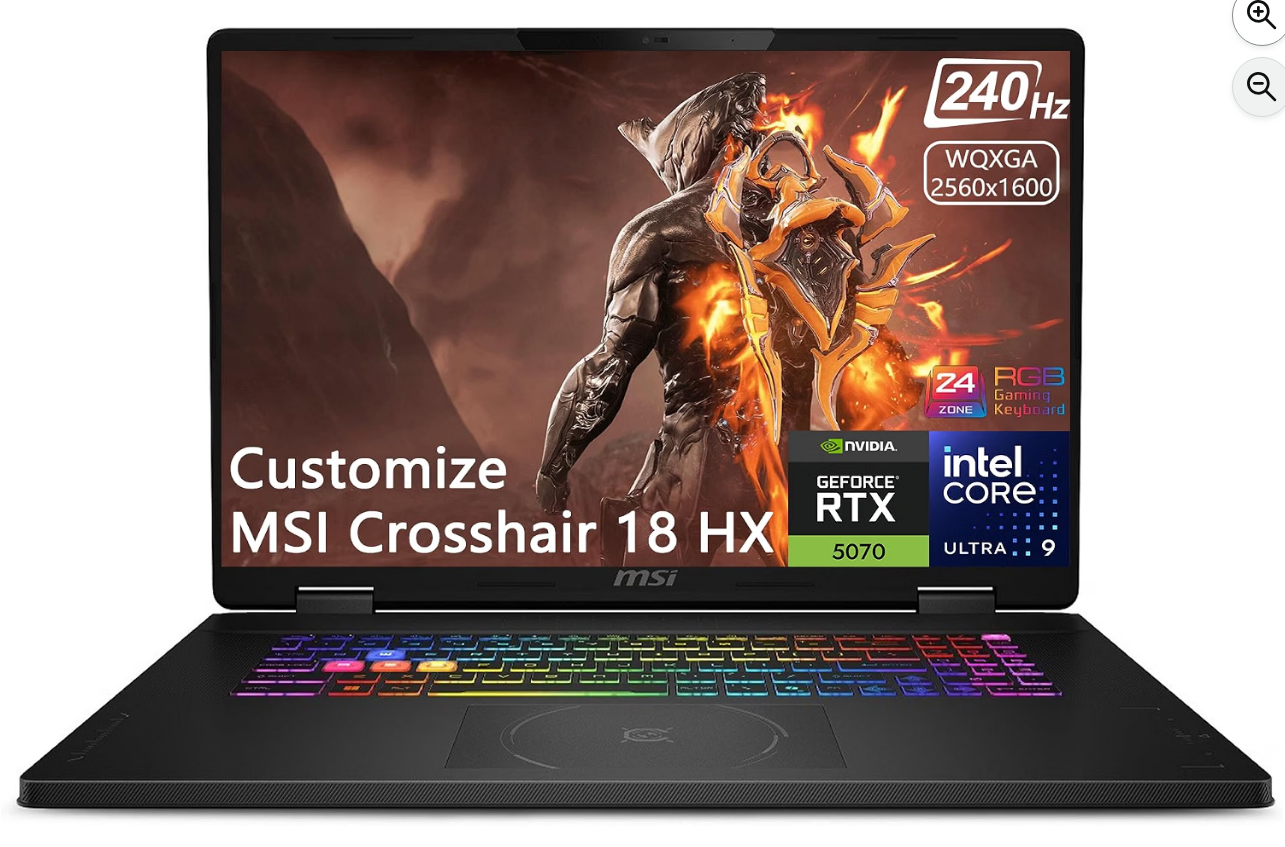
1. MSI Crosshair A18 HX
Best QHD+ Laptop for Overwatch 2 – RTX 5070
Forget FHD with this laptop. Seriously. The RTX 5070 is WAY too powerful to buy specifically for 1080p Overwatch 2.
Everything I’m going to discuss here is about QHD/QHD+ gaming. More specifically, most of my testing was done at 2560 × 1600, which is slightly more demanding than standard 2560 × 1440 QHD because you’re pushing more pixels.
That’s really where this RTX 5070 + Ryzen 9 combination makes sense. You get the sharper resolution, Ultra settings and still have competitive framerates well above 100 FPS.
Overwatch 2 – QHD+ Ultra Benchmark
Balanced Mode – 2560 × 1600 Ultra
Performance Mode – QHD+ Ultra
I’ll put the full video here so you can see exactly how the framerate, GPU wattage, RAM and CPU thread usage change as the match gets more intense.
Balanced Mode: What Is It?
Balanced Mode is basically MSI’s middle performance profile. Instead of pushing the CPU, GPU and fans as hard as possible, the laptop lets power scale depending on what the game actually needs.
And Overwatch 2 is a PERFECT example of why you don’t always need Performance Mode.
When I’m simply walking around with almost nothing happening, GPU power can drop to only ~43W while framerates are still around 125 FPS.
As soon as a big fight starts, there are multiple players on screen and everyone starts shooting, GPU power moves up toward ~60W and framerates settle around 100 FPS.
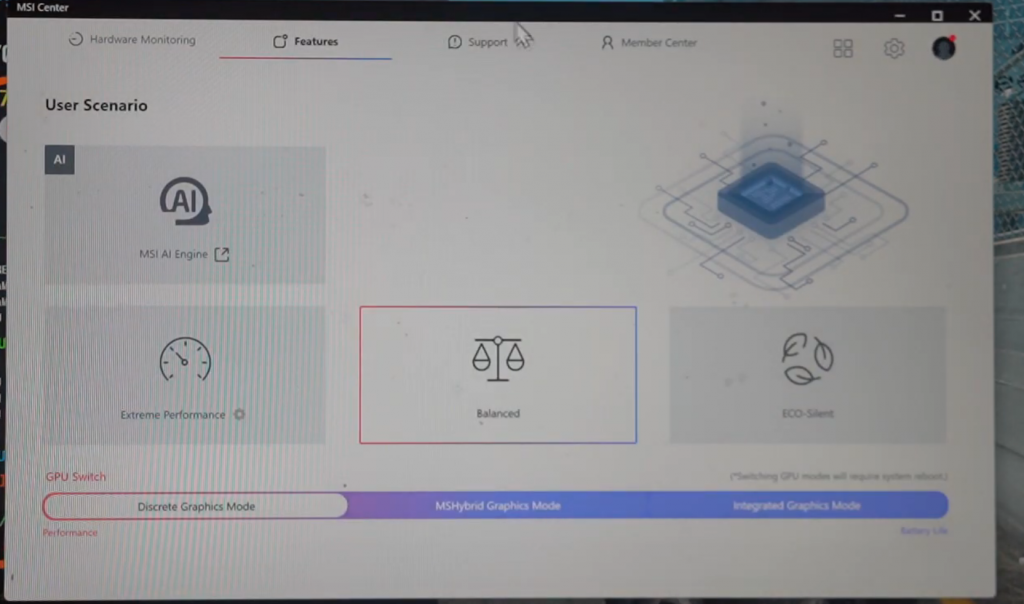
That’s all at 2560 × 1600 Ultra, by the way. We’re not talking about FHD here.
Performance Mode: 102W-108W
Switching to Performance Mode is a VERY different story.
Now the RTX 5070 is allowed to pull much more power and I was getting around 160 FPS at QHD+ Ultra while the GPU was using approximately 102W.
During the most intense fights, with basically everyone around me and effects flying everywhere, framerates dropped to around 125 FPS while GPU power climbed to roughly 108W.
So there is definitely a performance gain from letting the GPU use more power. Whether you actually NEED it is another question.
Balanced Mode already gives me around 100-125 FPS at 1600p Ultra. Performance Mode is what I’d use if I wanted to squeeze as much as possible out of the 240Hz panel.
CPU: Ryzen 9 – Overwatch 2 Uses A LOT of Threads
This was actually one of the more interesting things I noticed while benchmarking Overwatch 2.
Overwatch 2 is heavily multi-threaded.
I had 16 CPU threads showing significant activity, and even the remaining threads were still doing some work.
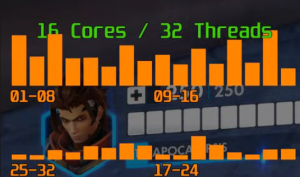
That’s VERY different from several other games I’ve benchmarked on this laptop.
In those games, CPU thread usage usually started falling off pretty hard after about eight threads. You’d still see activity on the others, but it wasn’t nearly as significant.
Overwatch 2 was different. The workload was spread much more heavily across the CPU.
So if you’re choosing between similarly priced high-end laptops specifically for Overwatch 2, this is one of those games where I’d STRONGLY favor the Ryzen 9 configuration. Those extra cores and threads aren’t just sitting there doing nothing.
Obviously you don’t need a Ryzen 9 just to run Overwatch 2. The cheaper laptops above already prove that. I’m talking specifically about a high-end QHD+ setup where you’re trying to push very high framerates.
GPU: RTX 5070 8GB – FHD Is Pointless Here
Again, I wouldn’t even bother discussing FHD performance with this GPU.
An RTX 5070 is WAY more GPU than Overwatch 2 needs at 1920 × 1080. If you’re spending this much money, use the 2560 × 1600 QHD+ display.
You’re getting a noticeably sharper image and you’re STILL sitting around 100-160 FPS at Ultra depending on the laptop performance profile and what’s happening in the match.
This is also a nice example of GPU wattage actually mattering. Going from roughly 43-60W in Balanced Mode to around 102-108W in Performance Mode produces a very obvious FPS increase.
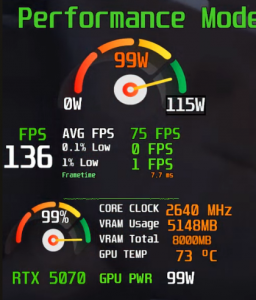
vRAM Usage: Only Around 5.5GB at QHD+
Here’s another interesting result: vRAM usage never went much past around 5.5GB during my QHD+ Ultra testing.
The RTX 5070 has 8GB, so obviously there’s plenty of room left.
More importantly, this tells us that 6GB vRAM is enough for Overwatch 2 at QHD/QHD+ Ultra based on this test. You’re not hitting some 7-8GB vRAM wall here.
That means an RTX 4050 with 6GB, for example, has enough vRAM capacity for QHD Overwatch 2 as well. Of course actual framerates will be lower because it’s a weaker GPU, not simply because it has 6GB instead of 8GB.
And for Overwatch 2 the drop shouldn’t suddenly make QHD unusable. This game just isn’t anywhere near as graphically demanding as something like Cyberpunk.
RAM Usage: 16GB Is Fine
System RAM usage stayed at around 14GB during the benchmark.
And that’s with my normal Windows stuff running in the background. I wasn’t closing every little process just to make the benchmark look better.
So 16GB RAM is perfectly fine for Overwatch 2, even at QHD+ Ultra.
I wouldn’t buy the 32GB or 64GB version expecting more FPS. Those configurations make sense for heavier multitasking and workstation-type work, not because Overwatch 2 needs that much memory.
Display: 18-inch QHD+ 240Hz
This is exactly the type of display that actually makes an RTX 5070 worthwhile for Overwatch 2.
You get an 18-inch 2560 × 1600 panel with a 240Hz refresh rate.
At Ultra settings you’re not going to sit at 240 FPS all the time, but that’s not the point. You can run QHD+ Ultra at 100-160 FPS depending on the mode, or start lowering settings if you want to chase much higher competitive framerates.
THAT makes a lot more sense than buying an RTX 5070 and then playing Overwatch 2 at FHD.
Balanced vs Performance Mode: Which One?
For regular Overwatch 2 matches, I’d honestly use Balanced Mode.
Getting roughly 100 FPS during heavy fights and up to 125 FPS when things calm down at 2560 × 1600 Ultra while the GPU only runs between roughly 43W and 60W is already VERY good.
If I’m playing competitively and want every frame I can get, then yeah, switch to Performance Mode. You’re looking at around 160 FPS normally and approximately 125 FPS during the heaviest fights, with GPU power around 102-108W.
That’s basically the choice: lower power and already excellent performance, or crank the laptop up and take the extra frames.
Who Should Actually Buy This?
Not somebody looking for the cheapest Overwatch 2 laptop.
You can spend MUCH less and still play Overwatch 2 beautifully at FHD.
This MSI is for someone who specifically wants QHD+/1600p, Ultra settings, a 240Hz display and enough GPU power left over for much more demanding games.
For that kind of setup, the RTX 5070 + Ryzen 9 combination makes a lot more sense. Especially because Overwatch 2 is one of the games where all those CPU threads are actually being put to work.
[ScrollableTable]
| MSI Crosshair A18 HX | |
| PROS | CONS |
|
|
[/ScrollableTable]
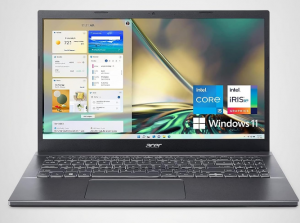
2. Acer Aspire 5
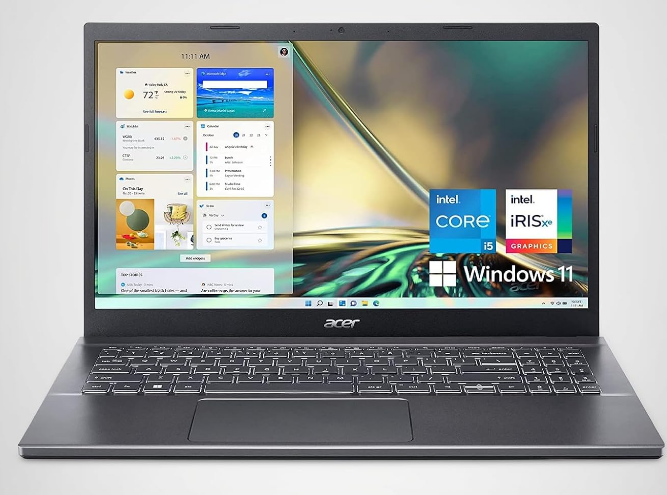
Budget Laptop for Overwatch 2 – RTX 2050
I’d say the RTX 2050 is about the bare minimum dedicated GPU I’d look at if you want to play Overwatch 2 competitively while still having enough power to crank the graphics up when you want to.
The situation is a little different in 2026 though. RTX 2050 laptops are older and stock isn’t as good anymore, so prices have actually gone UP in some cases. This Acer Aspire 5 is around $699.
That’s still okay, but CHECK RTX 3050 prices before buying. If a 3050RTX laptop is only another $50-$100, I’d take the 3050RTX. Otherwise, the 2050RTX still gives you more than enough performance for Overwatch 2.
Before we get to the benchmarks, let’s talk about the 2050RTX in general so you know what to look for if this Acer goes out of stock.
GPU: RTX 2050 4GB vRAM
You could say the RTX 2050 sits in roughly the same performance tier as the good ol’ GTX 1650. Both have 4GB vRAM and in a lot of games the framerate differences aren’t massive.
The advantage of the RTX 2050 is that it’s an RTX GPU and therefore supports features such as DLSS in games that allow it. That’s useful if Overwatch 2 isn’t the only game you’re going to play.
GPU Wattage
RTX 2050 laptops are generally low-power compared with larger gaming GPUs, which is one of the reasons you’ll find the GPU inside thinner laptops like this Aspire 5.
Exact GPU wattage depends on the laptop though, so don’t assume every RTX 2050 performs exactly the same.
MUX Switch: Most cheap RTX 2050 laptops aren’t really bought because of features like a MUX Switch. If competitive performance is your main concern, this becomes more important when you start moving into more expensive gaming laptops.
RTX 2050: Overwatch 2 Benchmark
I’m featuring one benchmark here, but there are more RTX 2050 benchmarks in the last section.
As for Epic settings, you should expect around 60 FPS during combat and about 75 FPS out of combat based on the benchmarks.
CPU: Core i5-1240P vs Ryzen 5 6600H
CPU performance plays a bigger role in Overwatch 2 than it does in a lot of graphically demanding AAA games, especially when you’re trying to push really high framerates.
This Acer uses the Core i5-1240P. It’s not a high-power H-series gaming CPU like the old MSI configuration, but it’s still a 12-core/16-thread processor and easily fast enough to pair with an RTX 2050 for Overwatch 2.
You’d get similar performance from comparable Ryzen 5 CPUs. Exactly which one comes out ahead depends on the laptop, cooling and power limits, not just the advertised boost frequency.
RAM: 16GB DDR4
The game technically runs FINE with 8GB RAM.
But I’ve benchmarked Overwatch 2 with 8GB and 16GB configurations before and there was a noticeable improvement in performance. In those tests Overwatch 2 was using around 9GB of RAM.
Luckily, this Acer already comes with 16GB RAM, so you don’t have to immediately spend money upgrading it just to play Overwatch 2.
Memory configuration can still affect performance. I have a guide on dual-channel RAM and another showing how to install RAM in dual-channel mode.
Display: 60Hz vs 120Hz / 144Hz
Here’s the main downside of this Aspire 5 for Overwatch 2: the display isn’t a high-refresh gaming panel.
The RTX 2050 can easily push well above 60 FPS, especially when you lower the graphics settings for competitive play, but a 60Hz screen obviously can’t show 120 or 144 frames every second.
If you’re just playing casually, that’s fine. If you’re VERY competitive, I’d either connect a 120/144Hz external monitor or look for an RTX 2050/3050 gaming laptop with a 120Hz or 144Hz display.
RTX 2050 Laptop Alternatives
The biggest thing to keep in mind in 2026 is that RTX 2050 prices aren’t as low as they used to be. Older stock can actually be MORE expensive simply because fewer models are available.
So don’t automatically assume a 2050RTX laptop is the cheapest option. Compare it against RTX 3050 laptops before buying.
[ScrollableTable]
| Link | GPU | CPU | Display | Price |
| MSI GF63 Thin | RTX 2050 | Core i5-12450H | 144Hz | 770 |
| HP Victus | RTX 2050 | Ryzen 5 7535HS | 144Hz | 780 |
| Acer Aspire 5 | RTX 2050 | Core i5-1240P | 60Hz | ~$699 |
[/ScrollableTable]
[ScrollableTable]
| Acer Aspire 5 | |
| PROS | CONS |
|
|
[/ScrollableTable]
3. HP Victus 15
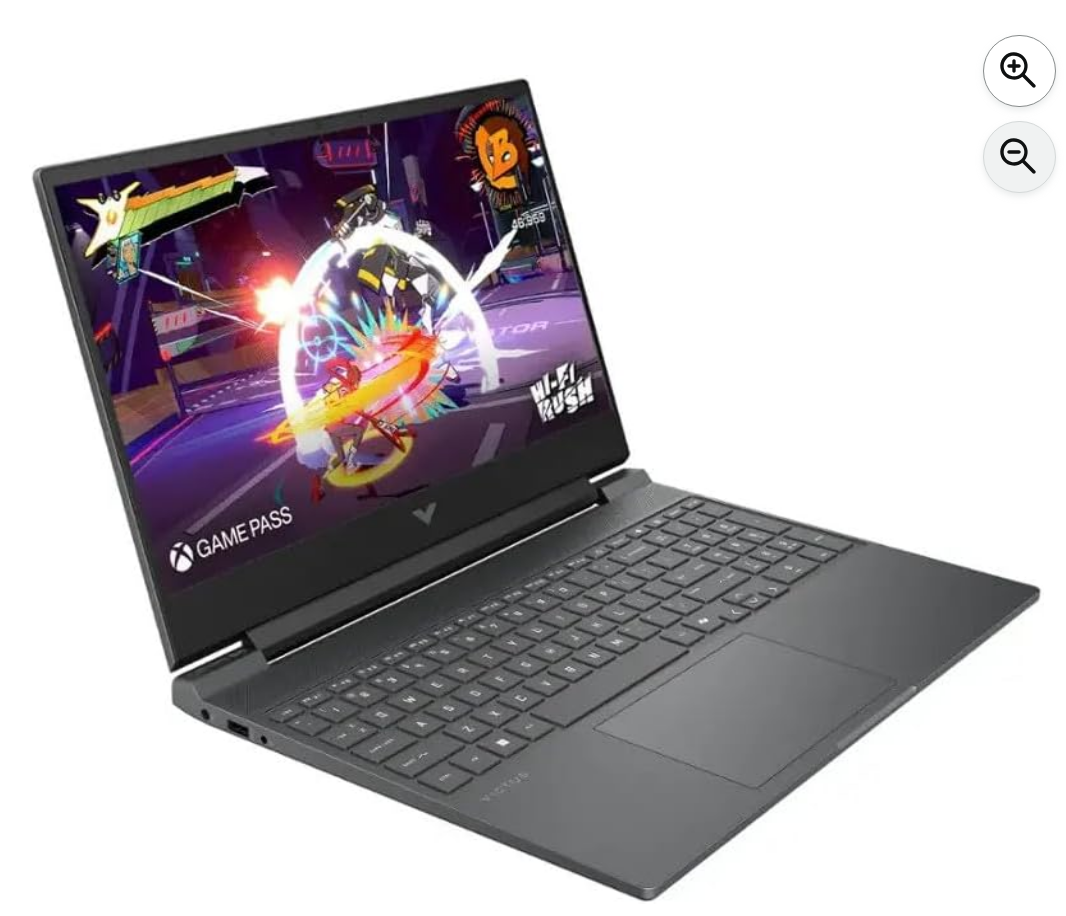
Best Value Laptop for Overwatch 2 – RTX 3050
This is probably my favorite option on the list right now because it sits in a REALLY good spot price-wise for Overwatch 2. You can easily play at Ultra settings with competitive framerates, and unlike the cheaper Aspire 5, you also get a proper 144Hz gaming display.
Here’s the important part: the RTX 2050 Acer Aspire we just went over is around $700. This HP Victus is around $769.
That’s only about $69 more. At that price difference, I would absolutely take this HP Victus. You’re getting an RTX 3050 with 6GB vRAM plus a 144Hz display instead of the regular 60Hz screen on the Aspire.
If the price difference grows to $150-$200, then the 2050RTX starts making more sense again. But at roughly $70? The 3050RTX is easily worth the extra money.
GPU: RTX 3050 6GB vRAM
There are several RTX 3050 laptop configurations floating around: older 4GB models, the 3050Ti 4GB and newer RTX 3050 laptops with 6GB vRAM.
This HP Victus has the RTX 3050 6GB, which is the version I’d rather have today. The extra vRAM gives you more room when you start increasing graphics settings or playing games that are more demanding than Overwatch 2.
It’s also an RTX GPU, so you get DLSS support in games that actually use it. That’s another reason I’d pay the small premium over the RTX 2050 if both laptops are priced close together.
GPU Wattage
Like I explained earlier, you also have to pay attention to GPU wattage when comparing gaming laptops.
Two RTX 3050 laptops can perform differently depending on how much power the manufacturer allows the GPU to use, so I wouldn’t automatically assume every 3050RTX laptop will give you the exact same FPS.
For Overwatch 2 though, the RTX 3050 already has enough GPU power that CPU performance, RAM and the graphics settings also become very important once you’re trying to push well above 100 FPS.
RTX 3050Ti Benchmark – Overwatch 2
Those are GREAT numbers for a 144Hz display.
Just keep in mind that the video above is a 3050Ti benchmark. It is NOT a benchmark of this exact HP Victus RTX 3050 6GB.
The CPU, GPU configuration and laptop cooling can all affect performance, so don’t take 150 FPS as a guaranteed number for this machine. The benchmark is here to show you the general performance level of this GPU tier in Overwatch 2.
Display: 144Hz
This is actually one of the biggest reasons I’d spend the extra $69 over the RTX 2050 Acer Aspire.
The Victus has a 144Hz FHD IPS display.
Overwatch 2 can easily push above 100 FPS on this GPU tier, especially once you move away from Epic settings. So unlike a regular 60Hz laptop display, you can actually SEE a lot more of those frames.
For competitive Overwatch 2 this makes a HUGE difference. I’d much rather play at 120-144 FPS on a 144Hz display than generate 120 FPS on a 60Hz screen that can only show 60 of those frames every second.
CPU: 13th Gen Core i5-13420H
CPU performance plays a pretty big role in Overwatch 2 once you’re pushing high framerates.
This HP Victus uses the Core i5-13420H, which is exactly the type of CPU I want paired with an RTX 3050.
If you compare RTX 3050 laptops in benchmarks, don’t be surprised if one beats another despite having the same GPU. A faster CPU can make a noticeable difference in Overwatch 2, especially at competitive settings where the GPU isn’t being pushed as hard.
RAM & Upgrades
The weak point of this particular configuration is the 8GB DDR4 RAM.
Overwatch 2 will run with 8GB, but I’ve already seen the game use around 9GB in benchmarks. So if you want the best performance while also running Discord, browsers or recording software, I’d move up to 16GB.
Ideally you want 16GB running in dual-channel mode. I also have a guide showing how to install RAM in dual-channel.
As far as actual FPS goes, I would worry much more about getting to 16GB than trying to pay hundreds of dollars more for some higher-tier CPU.
RTX 2050 vs RTX 3050: Which One?
This is easy at the current prices.
Acer Aspire RTX 2050: ~$700
HP Victus RTX 3050 6GB: ~$769
For only about $69 more, I’d buy the Victus. The RTX 3050 is faster, you get 6GB instead of 4GB vRAM and, maybe even more importantly for Overwatch 2, you get a 144Hz display.
The Aspire 5 still makes sense if its price drops significantly below the Victus. But while they’re this close, the Victus has much better value for competitive gaming.
RTX 3050 Laptop Alternatives
RTX 3050 laptop prices are still all over the place, so don’t automatically buy another model just because it has the same GPU.
At around $769, this Victus already has the two things I care about most for Overwatch 2: the RTX 3050 6GB and a 144Hz display.
[ScrollableTable]
| Laptop | GPU | CPU | Display | Price |
| HP Victus 15 | RTX 3050 6GB | Core i5-13420H | 144Hz | $769 |
| Acer Aspire 5 | RTX 2050 4GB | Core i5-1240P | 60Hz | ~$700 |
[/ScrollableTable]
[ScrollableTable]
| HP Victus 15 | |
| PROS | CONS |
|
|
[/ScrollableTable]
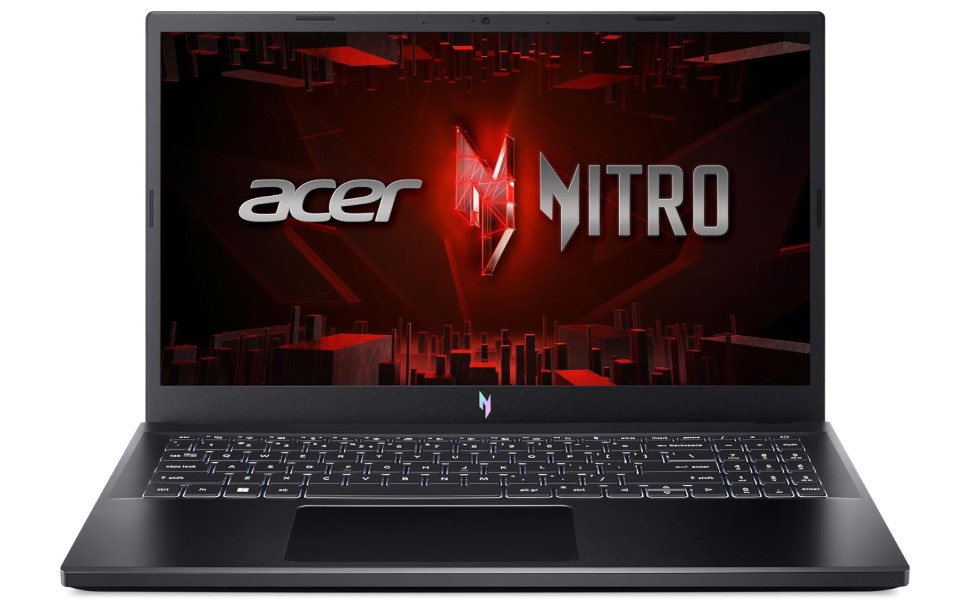
4. Acer Nitro V 15
The Best Laptop for Overwatch 2 – RTX 4050
The RTX 3050 laptop we went over is probably the better value if all you’re doing is playing Overwatch 2 at Ultra settings and below.
The Acer Nitro V featured here with the RTX 4050 makes more sense if you want to play at Epic settings all the time AND you also play more graphically demanding games.
Price-wise, the difference isn’t ridiculous either. The HP Victus RTX 3050 is around $769 while this Acer Nitro V is around $900. That’s about $130 more. If you only play Overwatch 2, save the money. If you’re playing lots of other games too, the 4050RTX is worth considering.
GPU: RTX 4050 6GB vRAM
For Overwatch 2, the RTX 4050 is definitely overkill unless you want to play the game entirely at Epic settings or push very high framerates at Ultra.
Where the 4050RTX really starts making more sense is outside Overwatch 2. It gives you A LOT more breathing room for newer AAA games than the RTX 2050 and RTX 3050.
Wattage
The RTX 4050 is an interesting GPU because performance scales quite well with wattage at the lower end, but eventually you start getting diminishing returns as you get closer to the higher power limits.
This Acer Nitro V runs its RTX 4050 at up to around 75W. That’s lower than some of the huge gaming laptops running the same GPU at 100W+, but Overwatch 2 isn’t really a game where you need maximum GPU wattage anyway.
That’s one of the nice things about the Ada Lovelace architecture: you can still get very good performance without having to push ridiculous amounts of power through the GPU.
You can read more about this in my GPU wattage guide.
MUX Switch
Don’t buy this specific Nitro V because you’re expecting a hardware MUX Switch. That’s not really the selling point of this configuration.
A MUX Switch can increase performance on gaming laptops because the dedicated GPU can send frames directly to the display, but with Overwatch 2 and an RTX 4050 you’re already looking at extremely high framerates anyway.
RTX 4050 Benchmarks: Overwatch 2
The benchmark above was carried out with a different laptop, an Acer Predator Helios Neo 16, so don’t treat these exact numbers as benchmarks for the Nitro V.
As for Epic settings, you’re looking at roughly:
Again, those numbers come from the Predator benchmark, NOT this exact Nitro V. That benchmarked laptop has different power limits and cooling.
What’s important is that it shows the general performance level of the RTX 4050. Overwatch 2 isn’t demanding enough to fully stress this GPU most of the time, especially at FHD.
CPU: Core i5-13420H
The benchmark above was carried out with another 13th-gen Core i5, while this Acer Nitro V uses the Core i5-13420H.
That’s already more than enough CPU power for Overwatch 2. Once you’re pushing 150-200 FPS, CPU performance starts becoming increasingly important because the RTX 4050 isn’t really the limiting factor anymore.
You could get somewhat higher framerates with a faster Core i7 or Ryzen 7, but I wouldn’t pay hundreds more just for that. At this point you’re already well into competitive framerates.
Display: 165Hz FHD IPS
The 165Hz display is probably one of the best reasons to buy this over a cheaper non-gaming laptop.
The RTX 4050 can easily push past 165 FPS at Ultra or lower settings in Overwatch 2, so you can actually make proper use of the panel.
The only thing missing here is QHD resolution. This is still a 1920 × 1080 FHD display.
Overwatch 2 is light enough that an RTX 4050 can handle 1440p pretty well, so QHD would’ve been a nice bonus. But at FHD you’re going to get much higher competitive framerates.
RAM & Upgrades
Unlike the old Lenovo LOQ configuration, this Nitro V only comes with 8GB DDR5 RAM.
That’s enough to launch and play Overwatch 2, but I’d STRONGLY recommend upgrading to 16GB.
We’ve already seen Overwatch 2 use around 9GB of RAM in benchmarks, so 8GB doesn’t leave much room once Windows, Discord, browsers and other programs are running.
If possible, run the memory in dual-channel mode. I also have a guide showing how to install RAM in dual-channel.
Storage is 512GB Gen 4, which is fine to start with but can fill up pretty quickly if you’re installing a bunch of 80-100GB games.
RTX 3050 vs RTX 4050
This is the decision I’d actually focus on.
HP Victus RTX 3050 6GB: ~$769
Acer Nitro V RTX 4050 6GB: ~$900
That’s roughly a $130 difference.
If Overwatch 2 is your main game, I’d probably save the $130 and get the RTX 3050 Victus. It’s already more than powerful enough.
If you’re also playing demanding AAA games, then yeah…I’d spend the extra money and get the RTX 4050. That’s where the extra GPU performance actually starts becoming useful.
[ScrollableTable]
| Acer Nitro V 15 | |
| PROS | CONS |
|
|
[/ScrollableTable]
5. ASUS ZenBook 14

Portable Laptop for Overwatch 2 – MX450
I decided NOT to feature another expensive RTX laptop here and instead include something completely different.
The ASUS ZenBook 14 with the MX450 is for one very specific type of person: a student who wants EXTREME portability for school or college but still wants a dedicated GPU that’s faster than integrated graphics so Overwatch 2 is actually playable.
That’s really the ONLY reason I’d buy this laptop in 2026.
If you’re sitting at home most of the time, get one of the RTX 2050/3050 gaming laptops above. They are much better gaming machines. The point of the ZenBook is that you DON’T have to carry one of those big gaming laptops around campus every day.
Availability in 2026: Mostly Refurbished
There’s one problem: this is an old laptop now.
The Amazon link above currently takes you to a refurbished version. Finding this exact Ryzen 5 5500U + MX450 configuration brand new is getting pretty difficult because these MX450 laptops aren’t really being produced anymore.
You may still find new old-stock through ASUS or official/authorized stores, but expect the price to be MUCH higher. And honestly, once the price gets too high it completely defeats the purpose of buying this machine.
I would much rather buy a good refurbished unit at a sensible price than pay some ridiculous premium just because an old MX450 ZenBook happens to still be sealed in a box.
Why MX450 Instead of Integrated Graphics?
This is technically a dedicated GPU, but don’t confuse it with something like an RTX 3050. The MX450 is MUCH weaker.
The important thing is that it’s still a real dedicated GPU with its own 2GB vRAM, and it’s faster for gaming than the integrated graphics found in most regular laptops from the same price/category.
That’s what makes this machine interesting. You’re basically getting the dimensions and design of a normal school/work laptop while sneaking in enough GPU power to play Overwatch 2.
GPU: MX450 2GB vRAM
The MX450 belongs to NVIDIA’s old MX series. You’ll also see MX350, MX550 and MX570 laptops floating around the refurbished/used market.
I’d stick with the MX450 or better if Overwatch 2 is part of the reason you’re buying the laptop. Older MX150/MX250 laptops are getting too weak and too old to make much sense now.
Also keep in mind that MX450 laptops came in different power configurations, so two machines with the same MX450 can perform somewhat differently. That’s another reason not to assume every benchmark will match this ZenBook exactly.
MX450 Benchmark – Overwatch 2
The benchmark above comes from a DIFFERENT MX450 laptop. It’s the best reference I have for this GPU, but don’t treat 150 FPS as a guaranteed number for this exact ZenBook.
CPU performance, MX450 wattage, cooling and RAM configuration can all move the numbers around.
The important takeaway is that an MX450 has enough power for competitive low-settings Overwatch 2 at 1080p. That’s impressive considering we’re talking about a thin school/work laptop rather than a proper gaming machine.
CPU: Ryzen 5 5500U
The Ryzen 5 5500U actually makes much more sense here than the H-series CPU in the old laptop I had in this spot.
Why? Because this isn’t supposed to be a gaming workstation.
The whole point is PORTABILITY. A U-series CPU is designed around lower power consumption, so it’s a much better fit for something you’re carrying to class, working on battery and using for normal schoolwork most of the day.
Then when you get home—or when you’ve got a break—you still have the MX450 available for Overwatch 2.
Display: 14-inch FHD 60Hz
The display is a regular 14-inch FHD 60Hz panel.
For schoolwork, that’s completely fine and the smaller 14-inch chassis is part of what makes this laptop so easy to carry around.
For competitive Overwatch 2 though, 60Hz is obviously the bottleneck. The MX450 can generate well above 60 FPS at low settings, but the internal display cannot show more than 60 frames per second.
If you’re REALLY serious about competitive Overwatch, connect it to a high-refresh external monitor when you’re at home. Otherwise, buy one of the 144Hz gaming laptops above.
RAM & Storage
You get 8GB DDR4 and a 256GB SSD.
Neither is impressive in 2026, but remember what this laptop is for: school/college work plus some casual competitive gaming.
If you’re buying refurbished, check the exact RAM and storage configuration carefully because sellers may have different versions of the same ZenBook.
Other MX450 Laptop Options
MX450 laptops are old now, so I wouldn’t shop by exact model first. I’d look through refurbished and leftover-stock listings and compare whatever is actually available.
[ScrollableTable]
| Laptop | Typical CPU | GPU | Best For |
| ASUS ZenBook 14 | Ryzen 5 5500U / 11th Gen Core i5-i7 | MX450 2GB | Maximum portability + school |
| Lenovo IdeaPad 5 / 5i | 11th Gen Core i5 / Ryzen 5 | MX450 2GB | Value / larger display |
| Lenovo IdeaPad 5 Pro | Core i5 / Ryzen 5 configurations | MX450 2GB | School/work + better display options |
| Acer Aspire 5 | 11th Gen Core i5/i7 | MX450 2GB | Cheaper refurbished option |
| ASUS VivoBook | 11th Gen Core i5/i7 | MX450 2GB | General school/work use |
[/ScrollableTable]
Again, I’m NOT choosing these because the MX450 is some amazing gaming GPU. I’m choosing this entire category because it gives you something integrated-graphics laptops usually don’t: a dedicated GPU inside a normal thin-and-light laptop.
Who Should Buy the ZenBook 14?
Buy it if you’re in school or college, carry your laptop around EVERY DAY and gaming is secondary.
You want something slim, easy to throw into a backpack and useful for classes—but you don’t want to be stuck with integrated graphics when you feel like playing Overwatch 2.
If portability isn’t extremely important, skip it. The RTX 2050 Acer and RTX 3050 Victus above are MUCH better gaming purchases.
[ScrollableTable]
| ASUS ZenBook 14 | |
| PROS | CONS |
|
|
[/ScrollableTable]
How To Buy The Best Laptop for Overwatch 2
Overwatch 2 still retains the same comic-style graphics across its characters, interface, textures and map details, so you can bet it scales pretty well with low-end systems.
You can corroborate this by looking at the hardware requirements published by Blizzard:
| Minimum Requirements | Recommended Specifications | |
|---|---|---|
| CPU | Intel Core i3 or AMD Phenom X3 8650 | Intel Core i7 or AMD Ryzen 5 |
| GPU | NVIDIA GeForce GTX 600 Series / AMD Radeon HD 7000 Series | GTX 1060 / GTX 1650 / AMD R9 380 / RX 6400 / Intel Arc A770 |
| RAM | 6GB RAM | 8GB RAM |
Those requirements are meant for desktops.
For laptops using modern hardware in 2026, I’d translate them more like this:
| Minimum / Budget | Recommended / Competitive | |
|---|---|---|
| CPU | Recent Core i3 / Ryzen 3 or better | Core i5-13420H / Ryzen 5 7535HS or better |
| GPU | Modern Iris Xe / Radeon / Intel Arc iGPU | RTX 2050 / RTX 3050 / RTX 4050 or better |
| RAM | 8GB minimum | 16GB |
A) GPU – #1 Most Important Factor
If you check the requirements and browse through benchmarks on YouTube, you’ll notice that a lot of the performance comes down to the graphics card. If you want to play competitively at high settings and high framerates, you want a dedicated graphics card.
Thus, to buy the best laptop for Overwatch 2 for your budget, the GPU should be the first spec you look at.
0. $300-500 iGPUs: Integrated GPUs
Integrated GPUs: these are graphics built into the processor. Thus, the integrated GPU usually depends on the CPU you choose. For example, a Ryzen 7 260 comes with Radeon 780M graphics.
To make it short and sweet, these are the integrated GPUs I’d pay attention to in 2026 if you CANNOT afford a dedicated GPU:
| iGPU | Example CPU |
| Intel Iris Xe | Core i5-1334U |
| Intel Arc 140V | Core Ultra 7 258V |
| Intel Arc B370 | Core Ultra 5 338H |
| Radeon 760M | Ryzen 5 8645HS / Ryzen 5 240 |
| Radeon 780M | Ryzen 7 8845HS / Ryzen 7 260 |
| Radeon 860M | Ryzen AI 7 350 / Ryzen AI 7 450 |
| Radeon 890M | Ryzen AI 9 HX 370 / Ryzen AI 9 HX 470 |
Don’t choose the CPU by generation alone. If you’re relying on integrated graphics, look at the actual iGPU. A newer processor can still have weaker graphics than another CPU in the same price range.
| GPU | CPU | RAM | FPS | Settings | Resolution | R. Scale | Youtube | Game |
| RX Vega 7 | R5 5500U | 16GB | 72 | Low | 1080p | Auto | Evo Tech | Overwatch 2 |
| Intel Iris Xe | i5 1135G7 | 16GB | 58 | Low | 1080p | Auto | Lonewalker | Overwatch 2 |
When you buy a laptop with an iGPU, 16GB RAM is highly recommended. If the laptop uses upgradeable DDR memory, dual-channel RAM can also make a big difference.
If there’s too much stuttering at 1080p, you can:
- Use a laptop cooler if temperatures are high.
- Lower the resolution to 720p or 900p.
- Adjust the resolution scale.
1. $570-650 dGPUs: RTX 2050 & GTX 1650
| NVIDIA | VRAM | Position in 2026 |
| GTX 1650 | 4GB | Older budget option |
| RTX 2050 | 4GB | Still one of the cheapest useful RTX GPUs |
| GPU | CPU | RAM | FPS | Settings | Resolution | R. Scale | Youtube | Game |
| 1650GTX | i5 10300H | 16GB | 200 | Low | 1080p | Auto | tabeneru | Overwatch 2 |
| 1650GTX | i5 10300H | 16GB | 50 | Epic | 1080p | Auto | Lonewalker | Overwatch 2 |
| 1650GTX | R5 3550H | 16GB | 145** | Low | 1080p | Auto | ShogunRos Gaming | Overwatch 2 |
| 1650GTX | R5 3550H | 16GB | 50** | Epic | 1080p | Auto | ShogunRos Gaming | Overwatch 2 |
| 2050RTX | Core i5 11400H | 16GB | 103 | Ultra | 1080p | Auto | Kachin Gamer | Overwatch 2 |
| 2050RTX | Core i5 11400H | 8GB | 101 | Ultra | 1080p | Auto | Tanaru Emy | Overwatch 2 |
| 2050RTX | Core i5 13th | 16GB | 58 | Epic | 1080p | Auto | Shan Gamer | Overwatch 2 |
**Both the CPU & GPU have been undervolted to keep temperatures LOW.
The RTX 2050 and GTX 1650 have fairly similar performance in Overwatch. The differences here are mostly due to settings, GPU wattage, RAM configuration and the CPU.
The CPU also plays a role. Overwatch uses multiple CPU threads, especially as you push toward very high framerates. However, core count alone doesn’t determine performance: architecture, clock speeds, cache, wattage and cooling all matter.
2. $650-750 dGPUs: RTX 3050 & RTX 3050 Ti
| NVIDIA | VRAM | 2026 Position |
| RTX 3050 Ti | 4GB | Older but still more than enough |
| RTX 3050 | 4GB / 6GB | Good budget option when discounted |
RTX 3050 Overwatch 2 Benchmarks
| GPU | CPU | RAM | FPS | Settings | Resolution | R. Scale | Youtube | Game | Mode |
| 3050RTX | R5 5600H | 16GB | 85 | Epic | 1080p | Low | BLG | Overwatch 2 | PvP Online |
| 3050RTX | R7 6800H | 16GB | 160 | Ultra | 1080p | High | Besciakk | Overwatch 2 | PvP Online |
| 3050RTX | i5 11400H | 16GB | 81 | Epic | 1080p | High | Toasted Bagel | Overwatch 2 | PvP Online |
RTX 3050 Ti Overwatch 2 Benchmarks
| GPU | CPU | RAM | FPS | Settings | Resolution | R. Scale | Youtube | Game | Mode |
| 3050Ti | R7 5800H | 16GB | 141 | Ultra | 1080p | Low | Greylion | Overwatch 2 | PvP Online |
The RTX 3050 Ti is faster on paper than the original RTX 3050. Nonetheless, the benchmarks show that CPU performance, wattage and the overall laptop configuration can easily change the result.
- Notice how the RTX 3050 Ti can still be outperformed when the RTX 3050 laptop has a faster CPU.
- Also notice the differences between the Ryzen 5 5600H, Ryzen 7 6800H and Core i5-11400H results. Don’t treat the GPU name alone as a guarantee of a specific framerate.
3. $800-1300 dGPUs: RTX 3060 & RTX 4050
| NVIDIA | CUDA Cores | VRAM | Position |
| RTX 3060 Laptop | 3840 | 6GB | Older high-performance option |
| RTX 4050 Laptop | 2560 | 6GB | Sweet spot for high-FPS FHD |
| GPU | Max TGP | Used TGP | CPU | RAM | FPS | Settings | Resolution | R. Scale | Youtube | Laptop |
| 4050RTX | 140W | 86W | i5-13500HX | 16GB | 180 | Ultra | 1080p | Auto | RTX 4050 | Helios Predator Neo 16 |
| 4050RTX | 115W | 65W | i5 12500H | 16GB | 110 | Ultra | 1080p | Auto | Besciakk | HP Victus |
| 3060RTX | 140W | 125W | R7 5800H | 32GB | 125 | Epic | 1080p | Auto | Nico | Lenovo Legion 5 2021 |
| 3060RTX | 140W | 137W | R7 6800H | 16GB | 100 | Epic | 1440p | Auto | Engineers Zone | ASUS TUF A15 2022 |
| 3060RTX | 140W | 131W | R7 6800H | 16GB | 150 | 4k | 4k | Auto | 64bitFox | ASUS TUF Gaming A17 FA707RM |
MAX TGP = The maximum power the GPU can use.
Used TGP = The maximum GPU power used during the benchmark.
Notice the huge difference between the two RTX 4050 results. That’s partly due to GPU power, but the faster CPU also plays a major role. You can’t predict a laptop’s FPS from the GPU name alone.
More GPUs: RTX 50 Series
The biggest update since the original guide is the RTX 50 Series. Here’s where the relevant GPUs fit:
| GPU | CUDA Cores | VRAM | Overwatch Use |
| RTX 4050 | 2560 | 6GB | Sweet spot for FHD / 165Hz |
| RTX 5050 | 2560 | 8GB GDDR7 | Newer entry RTX option; more than enough at FHD |
| RTX 5060 | 3328 | 8GB GDDR7 | Better suited for QHD/QHD+ and heavier games |
| RTX 5070 | 4608 | 8GB GDDR7 | Overkill for FHD; useful for QHD+/240Hz |
Our newer reviews make this pretty obvious. The RTX 4050 Acer Nitro V was already around 180 FPS at Ultra, while Epic settings were roughly 105-110 FPS. That’s enough for most players.
The RTX 5050 moves to 8GB GDDR7, while the RTX 5060 is already more GPU than I’d buy specifically for 1080p Overwatch.
Our Ryzen 9 7945HX + RTX 5070 test is a good example of where the extra power becomes useful. At 2560×1600, it ran around 100-125 FPS in Balanced mode and roughly 125-160 FPS in Performance mode, depending on what was happening on screen. That’s QHD+, not 1080p.
B) CPU
The CPU is a secondary factor. Once you’ve got enough GPU power, you can start being picky about the CPU.
Multicore vs Clock Speed Performance
Overwatch uses multiple CPU threads, but that doesn’t mean you should simply buy the CPU with the most cores. Strong per-core performance still matters a lot, especially when you’re pushing 144, 165 or 240 FPS.
Intel vs AMD
Both Intel and AMD now have more than enough CPU power for Overwatch. Compare the exact CPUs and the complete laptop configuration rather than choosing by brand.
These are some of the more relevant CPUs you’ll find in gaming laptops in 2026:
| CPU | Cores / Threads | Max Boost | Where It Fits |
| Core i5-13420H | 8 / 12 | 4.6GHz | RTX 4050 budget gaming |
| Ryzen 5 7535HS | 6 / 12 | 4.55GHz | Budget gaming laptops |
| Core i5-14450HX | 10 / 16 | 4.8GHz | Higher-power gaming laptops |
| Ryzen 7 260 | 8 / 16 | 5.1GHz | Strong current gaming CPU |
| Core i7-14650HX | 16 / 24 | 5.2GHz | High-end gaming laptops |
| Core Ultra 5 338H | 12 / 12 | 4.7GHz | 2026 Core Ultra Series 3 |
| Core Ultra 7 356H | 16 / 16 | 4.7GHz | 2026 performance laptops |
| Ryzen AI 7 450 | 8 / 16 | 5.1GHz | 2026 Ryzen AI 400 laptops |
| Ryzen AI 9 HX 470 | 12 / 24 | 5.2GHz | High-end thin/performance laptops |
| Ryzen 9 7945HX | 16 / 32 | 5.4GHz | High-end gaming; massive overkill for Overwatch alone |
Don’t compare CPUs by GHz alone. Architecture, cache, sustained power and cooling matter too.
If two laptops have the same GPU, THEN the CPU becomes an important way to separate them. A faster CPU can make a noticeable difference when you’re already pushing very high FPS.
Also remember that the advertised maximum turbo clock isn’t something the CPU will necessarily hold continuously. Wattage, temperatures, cooling and BIOS settings determine sustained performance.
C) RAM
8GB or Higher
The game can run with 8GB RAM, but I wouldn’t buy a new gaming laptop with only 8GB in 2026. 16GB is the sweet spot.
Our RTX 5070 QHD+ test had total system RAM usage close to 14GB, which is another reason 16GB makes much more sense today.
RAM for Integrated GPUs
More RAM is especially important if you have an integrated GPU.
Integrated graphics share system memory with the CPU. Going from a poor 8GB configuration to 16GB gives the system more headroom and, depending on the memory configuration, can substantially improve iGPU performance.
Dual Channel
If the laptop uses upgradeable DDR RAM, running two matching modules in dual-channel mode can improve memory bandwidth and gaming performance. This is especially important for integrated graphics.
To see why this increases performance, check my post on Dual-Channel RAM for Gaming.
D) Storage
Speed
There are two main types of storage devices you’re likely to run across: SSDs and HDDs.
Do SSDs improve gaming performance?
As far as FPS goes, not really. Virtually every modern laptop has an SSD now. If yours doesn’t because you’ve bought an old refurbished laptop, upgrade it. Windows, Battle.net and loading times will all feel much faster.
E) Display
The game is basically a fireworks show of colors going off all over the screen, so having a good display makes the experience much more visually appealing.
IPS over TN
IPS panels generally give you better colors and viewing angles, which makes them a much better fit for Overwatch. Most gaming laptops use IPS-class displays now, so this usually isn’t something you have to worry about.
Some older or extremely cheap laptops may still use TN panels. The difference in image quality can be pretty noticeable.
FHD
1080p is still standard and is more than enough for competitive Overwatch. If you’re spending less than $400 and are willing to play at 900p or 720p, I’d still get an FHD display because the extra resolution is much more useful for school and work.
QHD / QHD+
Overwatch runs well at 1440p once you get into RTX 4050-class graphics and above. A QHD/QHD+ display makes much more sense with an RTX 4050, RTX 5050, RTX 5060 or RTX 5070 laptop.
The RTX 5070 MSI Crosshair is a good example: its 2560×1600 240Hz display gives all that GPU power something useful to do. At 1080p, an RTX 5070 is overkill for Overwatch alone.
Refresh Rate
If you’re shopping specifically for Overwatch, refresh rate matters more than jumping from an already-fast GPU to a much more expensive one.
144Hz / 165Hz: the sweet spot for most people. An RTX 3050 or RTX 4050-class laptop can already make good use of these displays.
240Hz: makes more sense on higher-end systems where the CPU and GPU can consistently push very high framerates. This is where something like an RTX 5070 laptop starts to make sense.
Comments?
If you have any comments, suggestions, questions or recommendations on finding the best laptop for Overwatch 2, please let us know in the comments below.
