Friday, October 23, 2026
Laptops

5 Best Laptops For Counter Strike 2 (Competitive FPS) – 2026

I’ve been playing the Counter-Strike series since 2003.

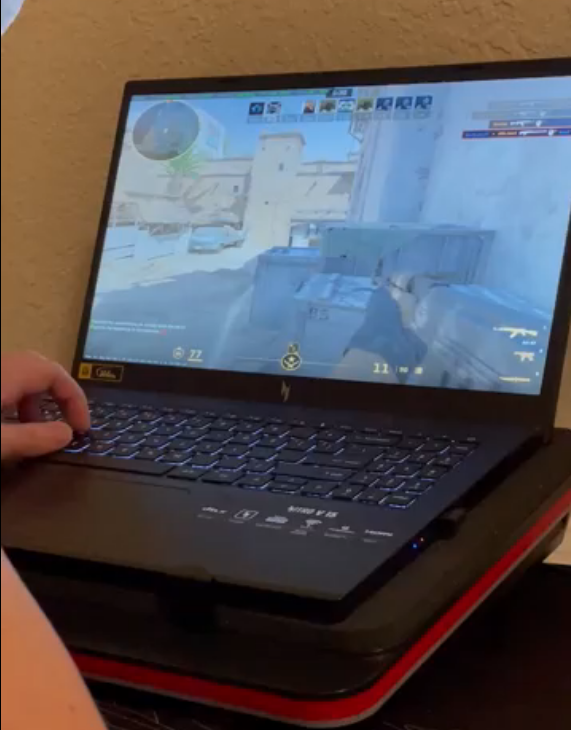
Old ass picture of me in my CS 1.5 days…

While older versions are still popular (especially 1.6), we’ll focus on Counter-Strike 2 here.

CS2 is more hardware-demanding than Global Offensive, so the best laptop for Counter-Strike 2 should be able to run all versions (CS 1.5, 1.6, Source, Condition Zero, and CS:GO) without any issues anyways.

Now…

To step up your game, you need two things:

  • High and consistent framerates with a high-refresh-rate display
  • Low frame latency

What’s frame latency?

It’s not lag—lag usually comes from a bad internet connection. Frame latency is a hardware-related delay where your CPU/GPU struggles to process frames quickly enough, which can make gameplay feel choppy even with a good internet connection.

Lag can make the overall experience worse, but they’re not the same thing.

Frame latency is the time it takes for the game to process your inputs (mouse clicks, key presses) and translate them into on-screen actions like movement or firing.

This delay, known as frame latency, usually becomes more noticeable as you increase graphics settings, which can lead to losses in situations you would normally win at lower settings.
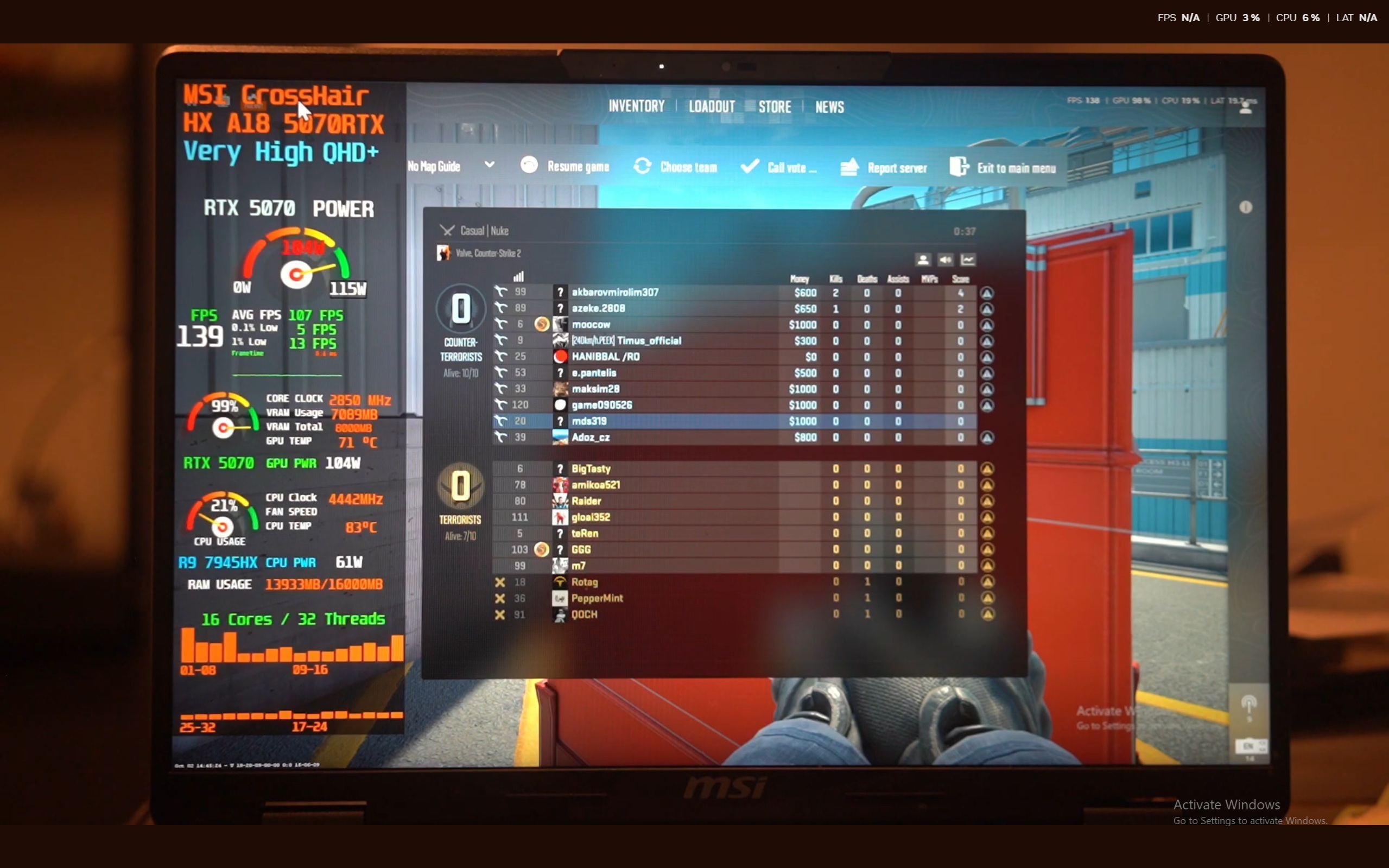
This is a 5070RTX. Overkill for CS 2 but IDEAL if you want QHD+ resolution since the set up can hit the magic competitive framerates (144fps) 150-170 at max settings on QHD.  I’ll review this laptop first since it’s on a deal.

Of course…

This only matters if you’re playing competitively. If you’re just playing for fun, you probably don’t need to worry about it.

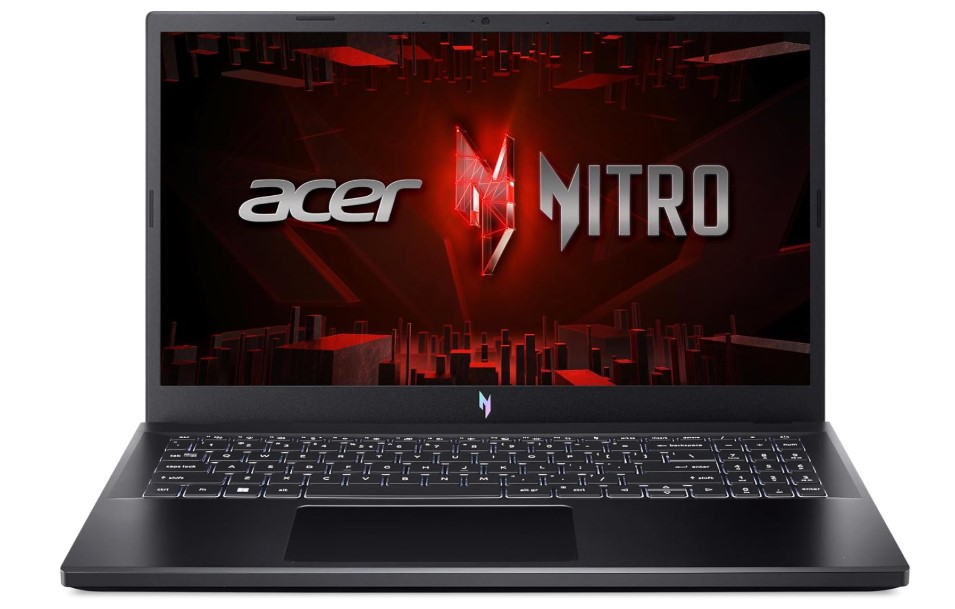
For competitive framerates with FHD at the HIGHEST settings, something like the Acer Nitro 5 which we will review soon is ideal (cheaper options will follow).
If you want superb graphics though (QHD resolution) and still get competitive framerates then you’d need a 5060RTX or 5070RTX like the MSI HX A18 which we will review first.

All other laptops however can pull off competitive framerates if you tweak the settings.

You can use the table of contents to jump to cheaper options.

Best Counter-Strike 2 Laptop Specs

Counter-Strike 2 isn’t Call of Duty—you don’t need high-end hardware to hit “competitive” framerates (~120 FPS).

GPU

All you need is a 4GB VRAM GPU for 1080p and 6GB VRAM for 1440p, and you can hit around 150–200+ FPS on competitive settings at FHD (a mix of low and medium settings).

RTX 2050, GTX 1650, GTX 1050 Ti: These all 4GB VRAM and can hit 60+ FPS on Very High and around 140+ FPS on mixed settings FHD.

RTX 4050, RTX 4060. These GPUs can hit 140+ FPS on Very High.

RTX 5060, RTX 5070. These GPUs are strcitly reserved for QHD resolution (1440p) 100-150fps.

The following GPUs should generally be avoided:

MX150, MX250, MX230, GTX 1050, MX450, MX550 (non-Ti)*

It’s not that they’re too weak. They’re just too expensive for the performance they give. 

*With the exception of the MX450 and MX550, newer integrated GPUs can easily outperform several of these older dedicated GPUs.

Integrated GPUs: If you’re trying to squeeze as much performance as possible out of an iGPU, get 16GB of RAM in dual-channel for an extra performance boost and choose the most recent CPU you can afford.

With a few exceptions, newer CPUs usually come with faster integrated graphics as shown in my post below:

CPU

According to my benchmarks, Counter-Strike 2 isn’t likely to bottleneck the CPU heavily and relies a lot on single-thread performance. In other words, you’ll benefit more from strong clock speed and single-thread performance than from simply having more cores.

Choose the most recent CPU with the strongest single-thread performance you can afford. Here’s a comparison chart of laptop CPU single-thread performance.

RAM

Counter-Strike 2 is similar to older versions. It doesn’t need a huge amount of RAM.

8GB should be enough, and you won’t need more than 16GB even at 4K resolution.

Storage

Most laptops now come with PCIe NVMe SSDs. The most common versions are PCIe 4.0 and PCIe 5.0. PCIe 5.0 is much faster on paper, but it doesn’t give you extra FPS in games—it mainly helps with file transfers and other storage-heavy workloads.

As for storage space, you’ll want at least around 120GB available for CS2 and future updates. Check my gaming storage guide here if you plan to install other games too.

Display

When it comes to displays, the real game changer for Counter-Strike is refresh rate. A high-refresh-rate display makes motion look smoother and makes it easier to track enemies, as shown below:

Top 5 Best Laptops for Counter-Strike 2

We’ll start with the one I use followed by something much cheaper but still high performance and competitive. We will follow with cheaper and cheaper options (3050RTX, 2050RTX and integrated graphics).

Let’s start with my personal favorite (the 5070RTX – on a deal as of Oct 2026!).


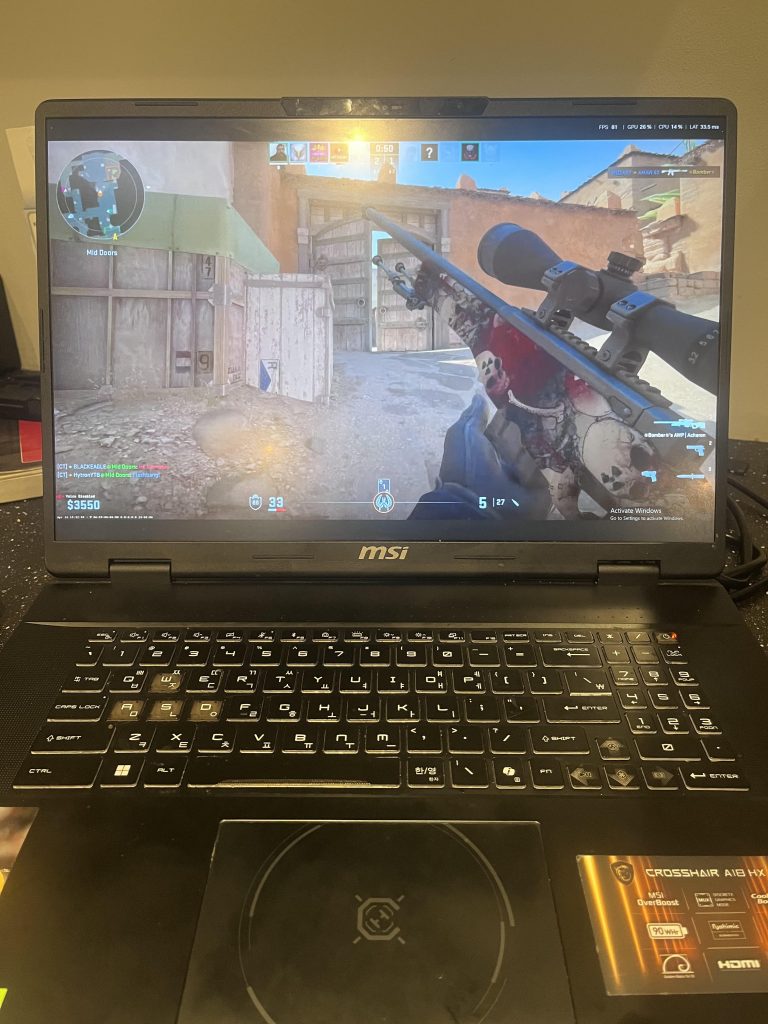
1. MSI Crosshair 18 HX AI
See Current Price

Best High-End Laptop for Counter-Strike 2 – RTX 5070

Okay guys, this is actually the laptop I use to play CS2, as you can see on my YouTube channel.

It’s definitely OVERKILL if you’re only going to play at FHD. Framerates can easily go past 200 FPS while the GPU stays at pretty low temperatures and doesn’t even need anywhere close to its maximum wattage.

Where this laptop actually starts making sense is competitive CS2 at QHD+/1600p. That’s where you can actually use the 5070RTX, the 8GB of vRAM and the 240Hz display without feeling like you bought way too much laptop for the game.

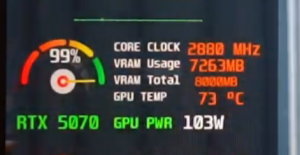
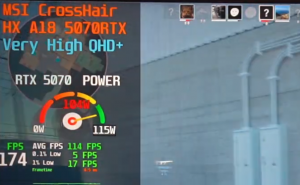
The video below was recorded at FHD, so obviously you can’t really see how much sharper 1600p looks through the video itself. You’d also need a QHD display to appreciate the difference. For now, pay attention to the RivaTuner stats on the left side because that’s where the interesting stuff is.
CPU: Intel Core Ultra 9 275HX
Graphics: RTX 5070 8GB GDDR7 – Up to 115W
RAM: 16GB / 32GB / 64GB DDR5
Storage: 512GB / 1TB / 2TB / 4TB SSD
Display: 18-inch QHD+ IPS 240Hz
Resolution: 2560 × 1600
  GPU: RTX 5070 8GB vRAM – Made for QHD
Like I said, this laptop is OVERKILL for FHD. You simply don’t need an 8GB 5070RTX just to play CS2 at 1080p.
Once you jump to QHD+/1600p though, the extra vRAM starts getting used. In my test, vRAM usage got close to 7GB with the graphics maxed out.
Counter-Strike 2 QHD vRAM usage on RTX 5070
So this is where the 5070RTX actually starts making sense. You’re not buying it because CS2 is some insanely difficult game to run. You’re buying it because you want very high framerates AND QHD resolution at the same time.
  Balanced Mode vs Extreme Performance: 50W-115W
The 5070RTX on this MSI can run anywhere from around 50W to 115W depending on the game settings, resolution and performance mode.
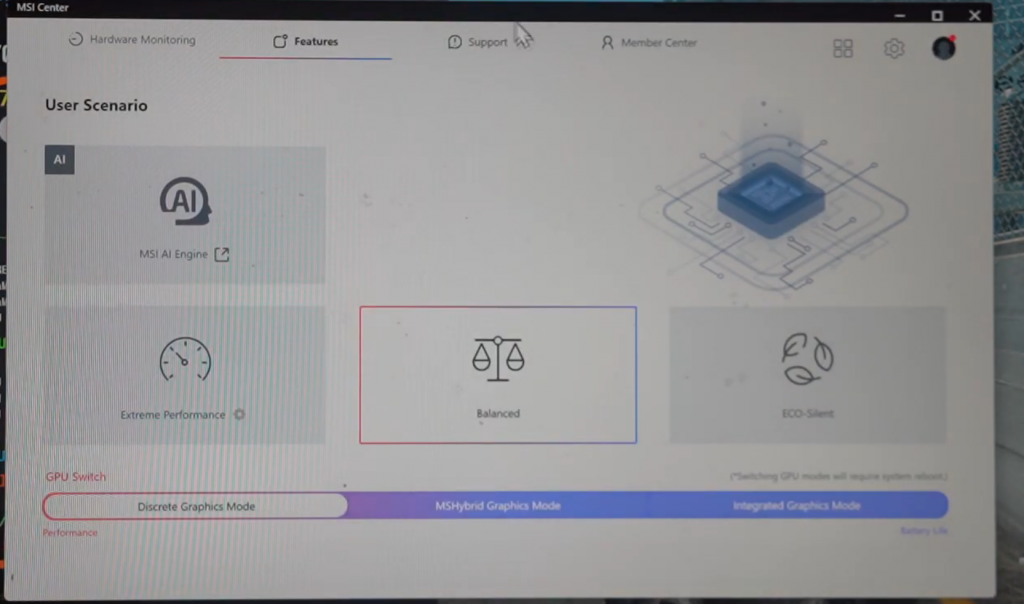
MSI calls the faster mode Extreme Performance. I don’t really like that name because it sounds like you’re doing something dangerous to the laptop. You’re not. It’s just the highest factory performance profile.
You can run the laptop in Extreme Performance for long gaming sessions, especially with Cooler Boost helping the cooling system. I just wouldn’t leave it blasting at maximum fan speed and maximum power all day every day if there’s no reason to.
RTX 5070 GPU power in Counter-Strike 2 QHD
At FHD, CS2 barely needs the full GPU. In my tests the 5070RTX could sit around 50-60W while still pushing huge framerates.
At QHD+ with all settings maxed out, Extreme Performance can push the GPU close to 108W during those 180 FPS moments. That’s already very close to the 115W limit of this configuration.
So yes…we’re basically talking about a full-power 5070RTX implementation here. There’s really no reason to try pushing it beyond the laptop’s normal power limits. At that point you’re just adding more heat for smaller and smaller performance gains.
MSI Crosshair Counter-Strike 2 performance mode
  Balanced Mode: Honestly, It’s All You Need
Here’s the funny part. CS2 at QHD with all settings maxed out doesn’t even need the GPU running anywhere close to 115W all the time.
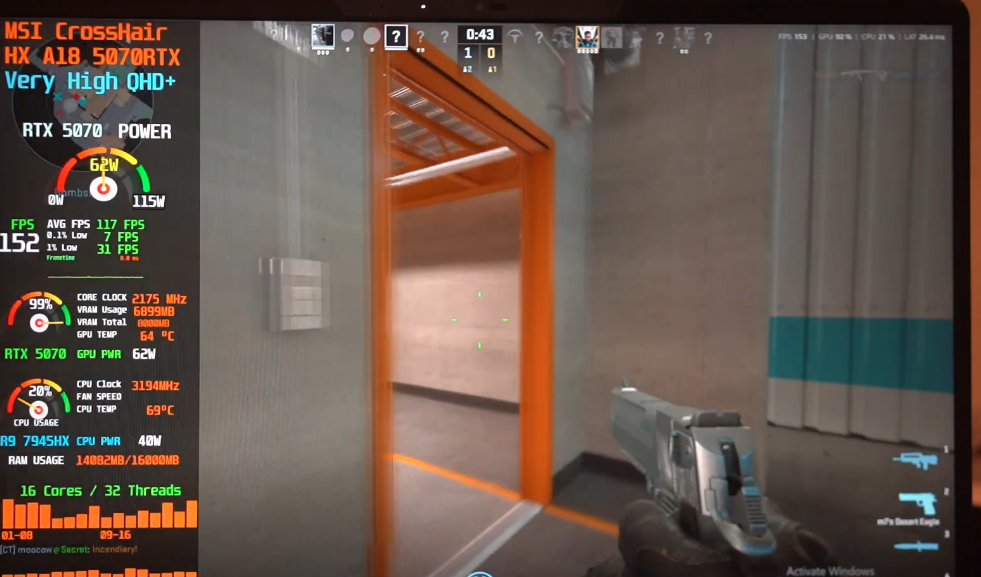
In Balanced Mode, the GPU was running at only around 62W and I was still getting about 152 FPS at QHD+ with everything maxed out.
MSI Crosshair RTX 5070 Balanced Mode Counter-Strike 2 benchmark
That’s why I wouldn’t obsess over running Extreme Performance every single time you play. If you’re already getting around 150 FPS at 1600p on max settings while the GPU is sitting near 60W…what exactly are you trying to fix?
Use Extreme Performance if you want every last frame. Otherwise, Balanced Mode is quieter, cooler and already ridiculously fast for CS2.
  CPU: Ryzen 9 or Core Ultra 9?
You’ll find this MSI with several high-end CPUs depending on the configuration: Ryzen 9 models and different Core i9/Core Ultra 9 models.
I used to describe CS2 as mostly single-thread dependent, and that was based on my older FHD tests. What I’m seeing now at QHD+ is a little different.
I’m NOT saying the higher resolution itself magically makes CS2 a completely different multi-threaded game. What I’m saying is that in my QHD+ benchmark, I can clearly see a lot more CPU threads being used than I expected.
Counter-Strike 2 multi-thread CPU usage
On this 16-core CPU, roughly half of the threads are doing meaningful work while the rest are being used much less. None of the busy threads are constantly sitting at 100% either.
So for this particular setup I’d pay attention to multi-thread performance, not just one single-thread benchmark score.
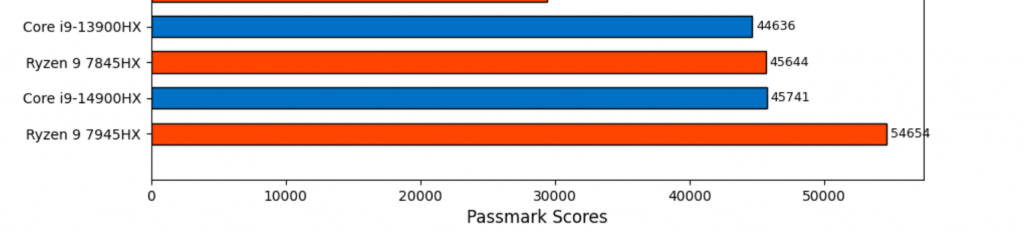
According to the CPU benchmarks I’ve already posted, some Ryzen 9 CPUs have stronger multi-thread results than their comparable Intel counterparts from the generations I’ve tested.
I haven’t finished testing every newer Ryzen 9 and Core Ultra 9 model yet, so I’m not going to pretend there’s some huge proven difference between the newest ones.
Ryzen 9 vs Core i9 multi-thread laptop CPU performance
And looking at the CS2 thread usage itself, I honestly don’t expect some gigantic difference anyway. You’re using a lot of cores, yes, but most of them aren’t maxed out.
So either a recent Ryzen 9 or Core Ultra 9 should be MORE than enough. You may squeeze out a few more frames with whichever model has the stronger multi-thread performance, but the 5070RTX and the display are still the main reasons to buy this laptop.


2. Acer Nitro V

The Best Laptop for Counter Strike 2 – RTX 4050

CPU: Intel Core i5-13420H
Graphics: NVIDIA RTX 4050 6GB
RAM: 8GB DDR5
Storage: 512GB PCIe 4.0 SSD
Display: 15.6-inch FHD IPS 144Hz
Weight: 4.66 lbs

In 2026, I wouldn’t call a 4050RTX laptop overkill for CS 2. The reason? Price. While the sweet spot may be a 3050RTX or even a 2050RTX….in 2026 prices for these laptops are hovering around 800 dollars! That’s a 200 dollars increase from last year. Basically you add 50-100 dollars and you can buy a high quality display (165Hz)+4050RTX.

GPU: 4050RTX 6GB vRAM

 The 4050RTX itself will let you run CS 2 at the highest settings with fps anywhere from 150-200. Now because 4050RTX laptops usually have at least 144Hz refresh rates and you’re hitting at least 150fps at the highest settings, paying for a 4050RTX gives you pretty much every bang for your buck since you’ll be able to see every framerate.

Now, let’s go over some GPU benchmarks:

The RTX 4050 comes in different wattages (70-120W), unlike the GTX 1650, RTX 2050, and RTX 3050, which typically have fixed wattages. Higher wattages on the RTX 4050 translate to significantly better performance.

Also, while the RTX 3060 might sound faster by name, in reality, it’s not much better than the RTX 4050—it’ll depend on the wattage but a 4050RTX running at 95W is equivalent to a 3060RTX running at 130W (max).

Here’s the thing with the benchmarks I’ve seen:

  • At FHD (1080p) on very high settings. Framerates get close to 140 FPS. This isn’t necessarily much higher than a 3050RTX laptop can output nonetheless it’s still close to the “144Hz” sweet spot.
  • At QHD (1440p), however, the RTX 4050 gets VERY close to 100 FPS.

The reason for this huge jump in QHD performance is the difference in vRAM: 4050RTX has 6GB of VRAM, compared to the 4GB VRAM found in the RTX 2050, RTX 3050, and GTX 1650.

GPU Watts MUX CPU FHD – QHD DLLS/FSR Graphics Youtube
4050RTX 115W NO Ryzen 5 7535HS 110 – none OFF/OFF Maximum? Low Gaming
4050RTX 115W NO Core i5 12450H 135 – none OFF/OFF Very High Budget PC Games
4050RTX 120W NO Ryzen 7 7840HS 152 – 98 OFF/OFF Very High Fire in it

At maximum settings (beyond “very high”), you can still hit 110-152 FPS. Pair that with a 120-144Hz display, and you’re looking at performance close to competitive framerates, even at very high settings.

Obviously, if you’re serious about a match (clan vs. clan), you’ll want to lower the settings to push past 200+ FPS for the smoothest experience.

CPU: Ryzen 5 or Core i5?

CS2 like most FPS games that don’t need to render lots of high quality graphics is mostly SINGLE-THREADED.

If we limit ourselves to the CPU options for entry level 4050RTX, we are left with Core i5 and Ryzen 5 CPUs from two or three generations. Out of these the 13th gen Core i5 is the fastest single-threaded CPU.

Ryzen 5 CPUs excel in multi-core performance, so if you’re playing more multi-threaded games and have the budget, a Ryzen 5 might be the better choice. For some games that do offer multi-core support check my post here:


2. HP Victus 15
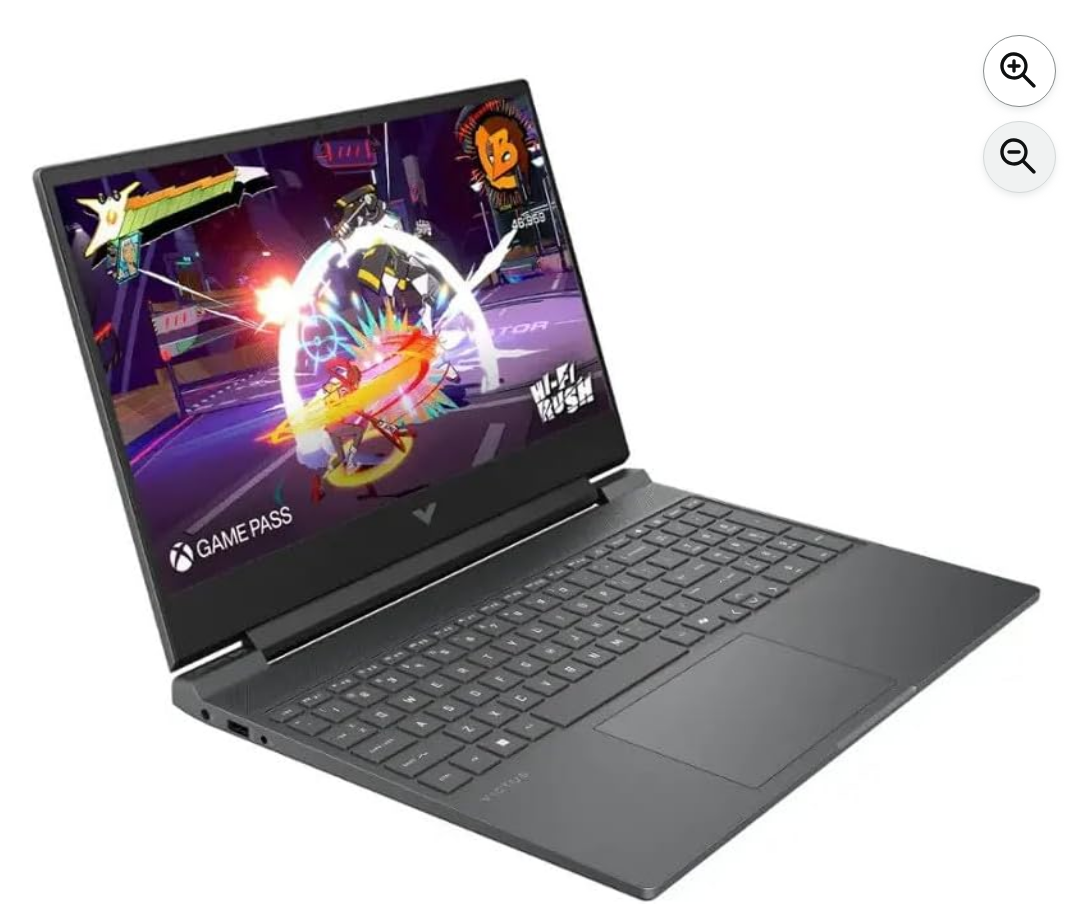
HP Victus 15 RTX 3050 Laptop for Counter-Strike 2

See Current Price

Cheap Laptop for Counter-Strike 2 – RTX 3050

Here’s the deal…3050RTX laptops are getting harder to recommend now that 4050RTX laptops are selling for around $900.

This HP Victus is still cheaper though. It’s selling in the $700s, so it makes sense if that’s basically the end of your budget. You also get the newer 6GB version of the 3050RTX, not one of the old 4GB models.

Just don’t overpay for it. If the difference between this and the 4050RTX Acer Nitro V above is only around $100-$150, I’d get the 4050RTX. If you’re saving closer to $200 though, then yeah…this Victus starts making sense.

CPU: Intel Core i5-13420H – 8 Cores / 12 Threads
Graphics: NVIDIA GeForce RTX 3050 6GB GDDR6
RAM: 8GB DDR4-3200
Storage: 512GB NVMe M.2 SSD
Display: 15.6-inch FHD IPS 144Hz
Weight: 5.06 lbs
  GPU: RTX 3050 6GB
The 3050RTX sits somewhere between the old GTX 1650 generation and the much faster 4050RTX.
The nice thing about THIS Victus is that it has the 6GB 3050RTX. A lot of the older 3050RTX laptops you’ll find in benchmarks only have 4GB vRAM.
For CS2 at FHD, 6GB is plenty. The game isn’t going to suddenly need 8GB just because you’ve maxed out the graphics at 1080p.
And that’s why a 3050RTX can actually look surprisingly close to a 4050RTX in SOME CS2 benchmarks. CS2 doesn’t hammer the GPU the same way a game like Cyberpunk does, especially at FHD. CPU, GPU wattage, RAM and the exact graphics settings can easily move the numbers around.
Check the benchmarks below:
[ScrollableTable]
GPU Watts MUX CPU FHD – QHD DLSS/FSR Graphics YouTube
RTX 3050 — NO Core i5-11400H 120 – none OFF/OFF Mixed Decoyout
RTX 3050 75W NO Ryzen 5 5600H 128 – none OFF/OFF Very High BLBG
RTX 3050 75W NO Core i5-12400H 140 – none OFF/OFF High revins
RTX 4050 115W NO Ryzen 5 7535HS 110 – none OFF/OFF Maximum? Low Gaming
[/ScrollableTable]
Now obviously this table does NOT mean the 3050RTX is actually faster than the 4050RTX. Look at the settings, CPUs and wattages. They’re all different.
That’s exactly the point though. CS2 at FHD isn’t always completely GPU limited, so a well-set-up 3050RTX laptop can get surprisingly close to a 4050RTX in certain tests.
If both laptops have similar CPUs, similar RAM configurations and you run the exact same graphics settings, the 4050RTX is still the faster GPU. So don’t buy a 3050RTX at almost the same price.
Feel free to click the benchmark links and check the differences yourself.
  CPU: Core i5-13420H
The CPU is actually one of the better parts of this configuration. You get the Core i5-13420H: 8 cores, 12 threads and boost clocks up to 4.6GHz.
For CS2 at FHD, that’s more than enough CPU for a 3050RTX. I definitely wouldn’t spend extra money trying to find this same GPU paired with a Core i7 or Ryzen 7.
Again…if you’re going to spend another $100-$200, put that money toward a 4050RTX instead. That’ll make a much bigger difference than upgrading the CPU while keeping the same 3050RTX.
  RAM: 8GB DDR4 – Upgrade This FIRST
Here’s the biggest weakness of this laptop: 8GB RAM.
CS2 itself can run with 8GB, but I wouldn’t leave a gaming laptop like this at 8GB in 2026. Windows, Discord, browser tabs, Steam and whatever else you’ve got running in the background can eat through that pretty quickly.
Upgrade it to 16GB. If the current 8GB configuration is a single stick, adding a matching second stick also gives you dual-channel memory, which is especially useful in CPU-heavy games like CS2.
  Display: 15.6-inch FHD IPS 144Hz
The display is exactly what I’d expect on a cheaper CS2 laptop: 1920 × 1080, IPS and 144Hz.
And honestly that’s fine. A 3050RTX belongs at FHD anyway. I wouldn’t buy this laptop expecting to max out CS2 at QHD like I would with the 5070RTX MSI above.
144Hz also matches this GPU pretty well. Once you’ve got 16GB RAM and optimize the settings, you’re actually going to be able to make use of that refresh rate.
The only thing that’s pretty average here is the panel quality itself: 250 nits and 45% NTSC. Fine for gaming indoors. Definitely not something I’d buy for serious photo or color work.
  Storage: 512GB NVMe SSD
You get a 512GB NVMe SSD. Speed is fine. Capacity is the problem.
CS2 itself isn’t the issue, but once you start installing a few other big games, 512GB disappears FAST.

4. Acer Aspire 5

Acer Aspire 5 RTX 2050 Laptop for Counter-Strike 2

See Current Price

Budget Laptop for Counter-Strike 2 – RTX 2050

Here’s the problem with RTX 2050 AND GTX 1650 laptops right now…both are old, stock is low and some sellers are asking ridiculous prices for them.

You’ll find 2050RTX laptops close to or even above $800, which makes ZERO sense when a much faster 3050RTX laptop can cost about the same.

This Acer is one of the few 2050RTX models that still kind of makes sense at around $700. Even then, if the 3050RTX Victus is only $50-$100 more, I’d buy the 3050RTX.

And the GTX 1650? That needs to be MUCH cheaper than this. You’re giving up performance, ray tracing hardware and DLSS support. I wouldn’t even consider a GTX 1650 unless it’s being sold at a serious discount.

CPU: Intel Core i5-1240P – 12 Cores / 16 Threads
Graphics: NVIDIA RTX 2050 4GB GDDR6
RAM: 16GB DDR4
Storage: 512GB SSD
Display: 15.6-inch FHD IPS 60Hz
Other: Thunderbolt 4 / Wi-Fi 6 / Backlit Keyboard
  GPU: RTX 2050
If you’re playing CS2 competitively you’re going to lower the settings anyway. Once you do that, a 2050RTX can easily push past 120 FPS at FHD depending on the CPU and exact laptop configuration.
At very high settings you’re looking at something closer to the 60-70 FPS range. Drop the graphics and framerates basically double.
Roughly 70 FPS at very high settings and around 120-140 FPS at low settings is a reasonable expectation for 2050RTX laptops at FHD, although CPU, wattage and MUX configuration matter.
  RTX 2050 vs GTX 1650
The GTX 1650 is the old alternative to the 2050RTX. For CS2 itself, performance isn’t massively different in every situation.
Here’s one interesting example:
[ScrollableTable]
GPU MUX CPU FHD Graphics YouTube
RTX 2050 NO Ryzen 7 ~70 FPS Very High Brutal X
GTX 1650 YES Core i5-9300H ~70 FPS Very High Tanuj Gaminator
[/ScrollableTable]
Don’t read that table as “GTX 1650 = RTX 2050”. They’re completely different laptops. The interesting part is that a MUX switch can help an older GTX 1650 laptop close the gap in a CPU-heavy game like CS2.
The problem is finding one. You’re going to be VERY hard pressed to find an old GTX 1650 laptop with a MUX switch at a price that actually makes sense.
  RTX & DLSS: Why the 2050RTX Should Cost More
For CS2 itself these features aren’t a huge selling point. But outside CS2, the 2050RTX has a pretty obvious advantage.
You get ray-tracing hardware and DLSS Super Resolution support in compatible games. The GTX 1650 doesn’t.
Just don’t confuse that with DLSS Frame Generation. That’s a newer feature and the RTX 2050 doesn’t support it.
That’s why a GTX 1650 laptop has to be MUCH cheaper than an RTX 2050 laptop before I’d even consider it.
You can read more here: GTX 1650 vs RTX 2050.
  Price: RTX 3050 vs RTX 2050 vs GTX 1650
This is really what it comes down to in 2026.
RTX 3050: Get this if it’s only around $50-$100 more than the 2050RTX. The performance jump is worth it.
RTX 2050: Makes sense around $700 if the 3050RTX laptops are noticeably more expensive.
GTX 1650: Only makes sense if it’s MUCH cheaper than BOTH. I’d want a serious discount because you’re buying an older GPU without DLSS support.
The old rule used to be something like “buy the GTX 1650 under $550”. I wouldn’t obsess over one exact number anymore because stock is so random. Just make sure the price gap actually matches the performance/features you’re giving up.
  CPU: Core i5-1240P
This Acer uses a Core i5-1240P. It’s not a gaming H/HX CPU but it’s more than enough for the 2050RTX.
And don’t automatically dismiss those old GTX 1650 laptops just because they have something ancient like a Core i5-9300H. The benchmark above shows that an old CPU like that can still run CS2 surprisingly well.
That doesn’t mean CPU performance doesn’t matter. It just means you don’t need some modern Core i7 to get good CS2 framerates from a low-end GPU.
  Display: This Acer’s Biggest Problem
Ironically, one thing some ancient GTX 1650 gaming laptops did BETTER than this Aspire was the display.
You can still find old GTX 1650 models with 144Hz panels. Drop the CS2 settings and they can actually make use of those 120+ FPS framerates.
This Aspire only has a 60Hz display, so that’s a pretty big negative if competitive CS2 is your main reason for buying it.
If you’ve already got a 144Hz/165Hz external monitor then whatever. Use that. Otherwise I’d seriously consider paying more for the 3050RTX Victus with the 144Hz screen.

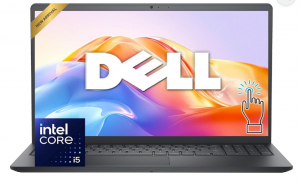
5. Dell 15.6-inch Touchscreen

Dell Core i5-1334U Intel Iris Xe Laptop for Counter-Strike 2

See Current Price

Cheapest Laptop for Counter-Strike 2 – Intel Iris Xe

If you’re on a REALLY tight budget, integrated graphics are basically your last option. That doesn’t mean CS2 is going to run terribly though.

This Dell is around $549 and comes with a 13th-gen Core i5-1334U + Intel Iris Xe. If you lower the graphics settings, make sure the RAM is set up properly and stick to FHD or lower resolutions, CS2 is absolutely playable.

You can also save even more money by looking for the older 12th-gen Core i5-1235U model I used to recommend. Performance isn’t massively different. The 13th-gen i5-1334U is a little faster overall, but don’t expect some huge iGPU jump because both are still using Iris Xe-class integrated graphics.

CPU: Intel Core i5-1334U – 10 Cores / 12 Threads
Graphics: Intel Iris Xe Integrated Graphics
RAM: 8GB RAM
Storage: 512GB PCIe SSD
Display: 15.6-inch FHD Touchscreen
Battery: Up to 9 Hours
  Integrated Graphics: How to Get Good FPS
If you’re using integrated graphics, you basically have to do three things:
  • Set the graphics to Low. You can still stay at FHD.
  • Make sure you pick the right CPU. The iGPU is literally built into it.
  • Upgrade to 16GB RAM in dual-channel if possible.
Do that and you can get pretty close to 100 FPS on Low settings. Around 70-80 FPS is a more realistic target depending on the map and what’s happening on screen.
  CPU: Core i5-1334U vs Core i5-1235U
If you’re shopping for cheap laptops with integrated graphics, the Core i5-1334U and older Core i5-1235U are still two of the better choices.
The old 12th-gen Core i5-1235U laptop I recommended before can still be a GREAT deal if you find it significantly cheaper. Don’t ignore it just because it says 12th gen.
The newer Core i5-1334U is a little faster overall and has higher CPU clocks, which helps CS2 since the game still likes strong per-core performance.
Now…the 13th-gen model does NOT have some completely different or revolutionary iGPU. Both CPUs use Iris Xe-class graphics.
The newer CPU can perform a little better depending on clock speeds, RAM and laptop power limits, but the biggest difference still comes from the RAM setup.
So if you find an i5-1235U laptop for $100 less, I’d seriously consider it. At this price level, that extra $100 matters more than a small FPS difference.
  GPU: Intel Iris Xe Benchmarks
With Intel Iris Xe you’re looking at roughly 70-80 FPS at FHD on Low settings and over 100 FPS at 720p in lighter situations.
That’s obviously nowhere near the 2050RTX/3050RTX laptops above, but remember we’re talking about integrated graphics here.
For casual CS2, that’s completely playable. For serious competitive play where you want 120+ FPS all the time, I’d move up to a dedicated GPU.
  RAM: 8GB vs 16GB – VERY Important for Iris Xe
This is probably the most important thing in the whole review.
Integrated graphics don’t have their own dedicated vRAM like an RTX GPU. They borrow system RAM.
So with only 8GB RAM, Windows and CS2 are fighting over the same memory while the iGPU also needs part of it for graphics.
If the laptop allows it, upgrade to 16GB in dual-channel mode. That gives the iGPU much more memory bandwidth and can make a pretty noticeable difference.
With integrated graphics, dual-channel RAM isn’t some tiny benchmark detail. It actually matters.
  Price: Don’t Spend Too Much on Integrated Graphics
This Dell is around $549.
That’s already getting close to the point where I start asking: why not save another $100-$150 and buy something with a dedicated GPU?
So I wouldn’t pay much MORE than this for an Iris Xe laptop specifically for gaming.
If you can find the old Core i5-1235U version for $400-$450, THAT’S where integrated graphics start making a lot more sense. You’re saving enough money to justify giving up the dedicated GPU.


How To Buy The Best Laptop For Counter Strike 2

The following guide applies to CS: GO as well as CS: 2.

How much hardware you need will depend on how high you want framerates to be and what settings you want to play at. If we are talking competitively, settings do not matter as much as framerates:

60 fps vs ~120fps

Most people, including myself, can easily get by with 60 FPS on public servers, deathmatch servers, etc.

However, if you want to be competitive or play clan matches, having more than 100 FPS—ideally 120 FPS—can slightly improve your overall performance for the following reasons:

  • As you move around the map, your FPS will drop by around 20 due to smoke grenades, close-range gunfights, flashbangs, etc. Aiming for higher framerates helps offset these drops, ensuring a consistently smooth experience throughout the game.
  • High framerates, when paired with a 120Hz+ refresh rate, can slightly improve reflexes. Essentially, you’ll be able to spot enemies a few milliseconds faster, and as you know, even that tiny difference can make or break a 1v1 fight.

Counter Strike 2 Laptop Benchmarks

GPU Watts MUX CPU FHD – QHD DLLS/FSR Graphics Youtube
2050RTX — YES Ryzen 7 775H 70 – none OFF Very High Brutal X
2050RTX — YES Core i5 11460H 62 – none OFF Very High Gaming Test
1650GTX — NO Core i5 9300H 70 – none OFF/ON Very High Tanuj Gaminator
3050 — NO Core i5 11400H 120 – none OFF/OFF Mixed Decoyout
3050* 75W NO Ryzen 5 5600H 128 – none OFF/OFF Very High BLBG
3050RTX 75W NO Core i5 12400H 140 – none OFF/OFF High revins
4050RTX 115W NO Ryzen 5 7535HS 110 – none OFF/OFF Maximum? Low Gaming
4050RTX 115W NO Core i5 12450H 135 – none OFF/OFF Very High Budget PC Games
4050RTX 120W NO Ryzen 7 7840HS 152 – 98 OFF/OFF Very High Fire in it
4060RTX 115W NO Core i5 13450HX 135 OFF / OFF Maximum Pazan Gaming

*Notice how the 1650GTX matches the performance ofa 2050RTX with a MUX Switch and a faster processor thanks to FSR. 

* 3050RTX had 32GB RAM in dual-channel mode

*Notice how there’s not a significant difference between 3050RTX and 4050RTX for 1080p very high settings. A 4050RTX becomes more useful (at high wattages) for 1440p.

*Notice how the 1650GTX matches the performance of a 2050RTX with a MUX Switch and a faster processor thanks to FSR.

*The 3050RTX benchmark used 32GB RAM in dual-channel mode.

*Also notice that the jump from the 3050RTX to the 4050RTX isn’t massive at 1080p in these particular tests. Faster GPUs become more useful as you increase resolution, graphics settings or play other, more demanding games.

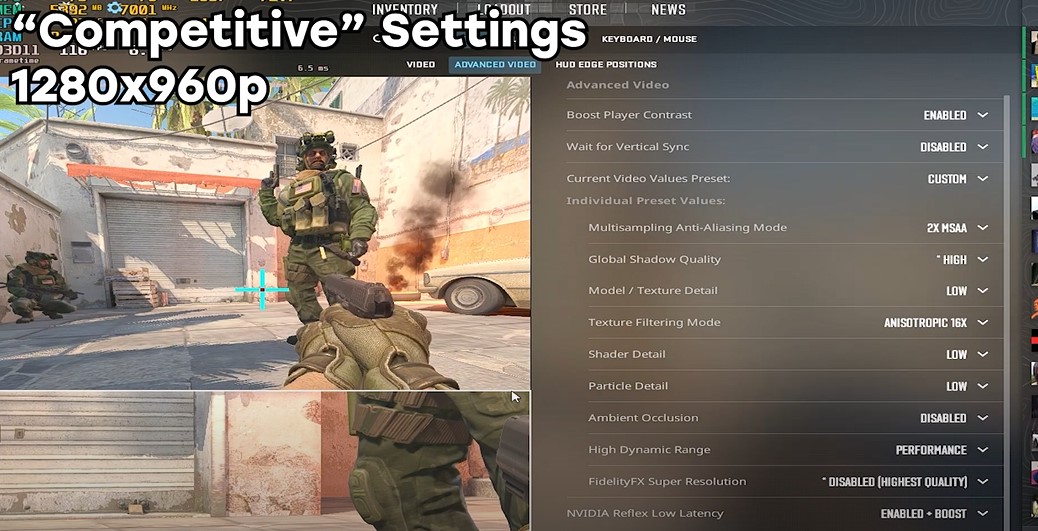
Competitive Settings

Competitive settings are usually lower than the settings shown above. Most players lower visual effects and resolution while keeping whatever settings help visibility.

Once you start chasing very high framerates, the CPU becomes increasingly important. In other words, buying a much faster GPU does not automatically give you proportionally higher FPS if the CPU is already the bottleneck.

Counter Strike 2 competitive settings

GPU (Graphics Card)

The GPU is still one of the main pieces of hardware behind your framerate, especially once you increase graphics settings or resolution.

There is a limit though. Counter-Strike 2 is not the type of game where you need an RTX 5080 or RTX 5090 just to get good performance. At competitive settings, you can eventually reach a point where the CPU becomes the bigger limitation.

Integrated GPU

Integrated graphics are worth discussing because you no longer necessarily need a dedicated GPU just to run CS2.

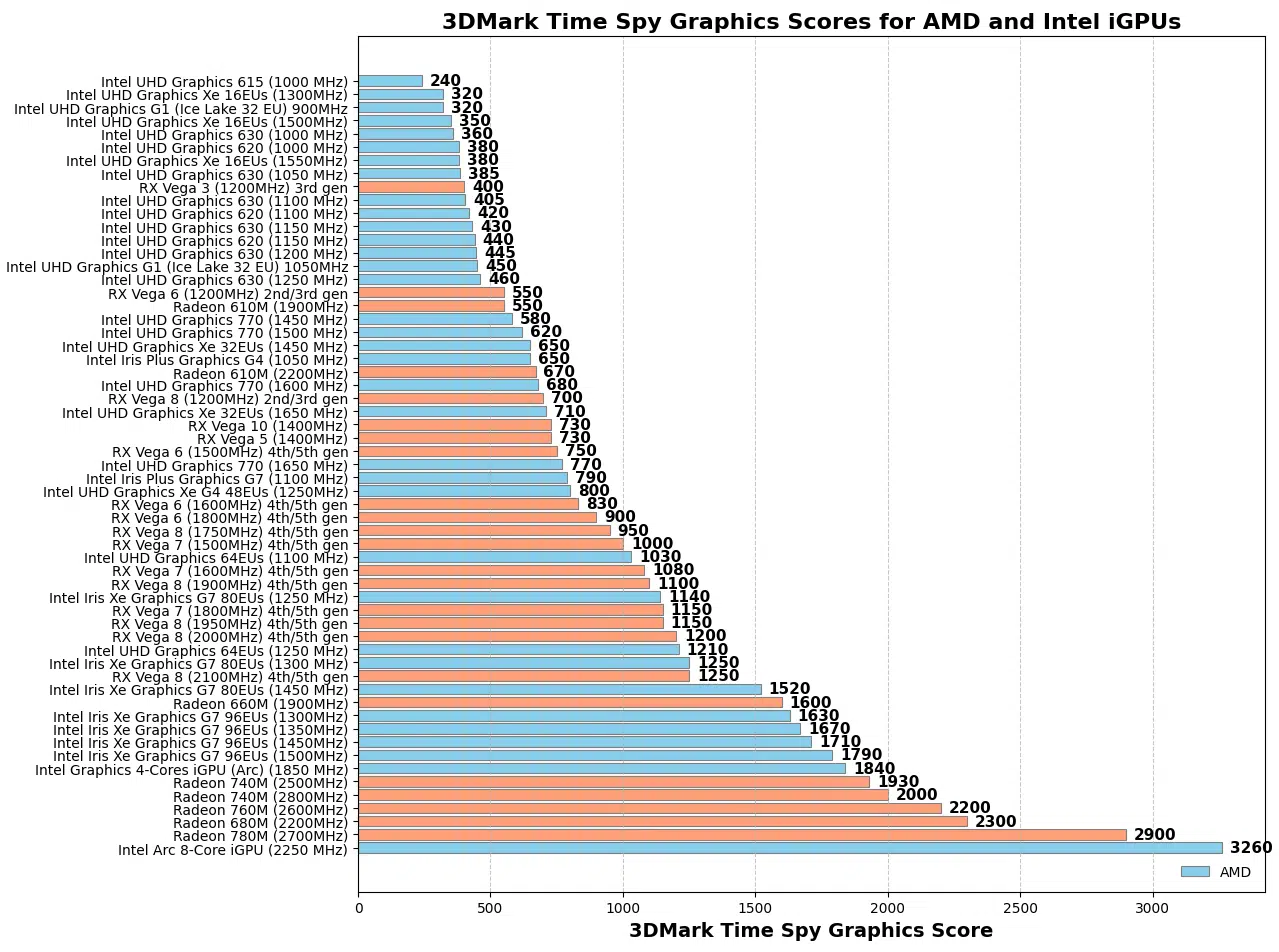
However, don’t assume every new integrated GPU is fast. There is still a huge difference between something like a basic Radeon 610M / Intel UHD and stronger modern integrated graphics such as Radeon 780M, Radeon 860M, Radeon 890M or Intel Arc 140V.

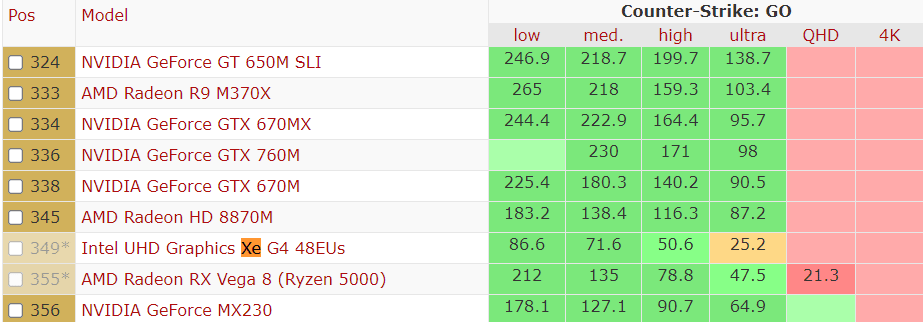
Older integrated GPU Counter Strike comparison

The graph above is an older CS:GO comparison, so don’t use the exact FPS numbers for CS2. It is still useful for showing how much integrated graphics have improved over the years.

For a new laptop, pay more attention to the actual integrated GPU than simply whether the CPU says Core i5, Core Ultra or Ryzen 7.

Here are a few relevant CPU/iGPU combinations you’re likely to run across. This isn’t supposed to list every laptop CPU ever made.

[ScrollableTable]

CPU Integrated GPU
Core i3-1315U Intel UHD Graphics
Ryzen 5 7520U Radeon 610M
Core Ultra 5 125H / Ultra 7 155H Intel Arc Graphics
Ryzen 5 240 / Ryzen 5 8645HS Radeon 760M
Ryzen 7 260 / Ryzen 7 8845HS Radeon 780M
Ryzen AI 7 350 Radeon 860M
Core Ultra 7 258V Intel Arc 140V
Ryzen AI 9 HX 370 Radeon 890M

[/ScrollableTable]

Gray: Basic integrated graphics. Fine if gaming is secondary, but I would not specifically buy one of these for CS2.

Blue: Much better integrated graphics and a more reasonable starting point if you cannot get a dedicated GPU.

Green: Strong integrated graphics. These are the iGPUs I’d look at if you want a thin laptop without a dedicated GPU but still want to play games.

Pink: Among the stronger mainstream integrated graphics options. At this point you’re getting much closer to entry-level dedicated-GPU territory.

Intel vs AMD integrated graphics comparison

The image above covers an earlier generation of integrated graphics, so use my integrated GPU comparison if you want to see where newer Radeon and Intel Arc iGPUs fit.

Dedicated GPUs

If you’re buying a gaming laptop today, you can skip the ancient MX150/MX250/GTX 1050-type GPUs. They only clutter the table and aren’t useful new-laptop recommendations anymore.

These are the NVIDIA laptop GPUs that actually matter for this guide in 2026:

[ScrollableTable]

NVIDIA Laptop GPU VRAM Where It Fits
RTX 3050 4GB / 6GB Older budget option. Still worth considering only when the laptop is cheap.
RTX 4050 6GB Good FHD option, especially when discounted.
RTX 5050 8GB Current entry-level RTX 50 option.
RTX 4060 8GB Still an excellent option if an older RTX 40 laptop is heavily discounted.
RTX 5060 8GB Current sweet spot if you also play more demanding games or want QHD/QHD+.
RTX 5070 8GB More GPU than you need for CS2 alone. Buy it for QHD gaming and more demanding titles.

[/ScrollableTable]

You may also find AMD gaming laptops. The list is much shorter because there’s no reason to dump every Radeon laptop GPU ever released into this guide:

[ScrollableTable]

AMD Laptop GPU VRAM Position
Radeon RX 7600S 8GB Mainstream dedicated option
Radeon RX 7700S 8GB Faster mainstream option
Radeon RX 7800M 12GB Higher-end option; unnecessary for CS2 alone

[/ScrollableTable]

Do not choose between two laptops from GPU name alone. Laptop GPU wattage still matters. An RTX 5060 running under a restrictive power limit can behave differently from the same GPU in a thicker laptop with more cooling and more available power. See my laptop GPU wattage/TGP guide.

Blue: Older budget hardware. Only makes sense when the price is right.

Green: The range I’d focus on for FHD CS2 and general gaming.

Pink: More than you need for CS2 alone. These make more sense if you’re also playing demanding AAA games or moving to QHD/QHD+.

CPU

If you’re buying a gaming laptop with a dedicated GPU, you still don’t need to obsess over the CPU model. Manufacturers generally pair current RTX GPUs with CPUs that are already fast enough to run CS2 well.

What has changed is that there are now a ridiculous number of Intel and AMD model names. You do not need a table containing every one of them.

These are some representative CPUs you’ll commonly see around modern gaming laptops:

[ScrollableTable]

Intel AMD
Core i5-13420H Ryzen 5 7535HS
Core i5-14450HX Ryzen 5 8645HS / Ryzen 5 240
Core i7-14650HX Ryzen 7 8845HS / Ryzen 7 260
Core Ultra 5 225H Ryzen AI 7 350
Core Ultra 7 255HX Ryzen AI 9 HX 370

[/ScrollableTable]

This is not a ranking. It’s just a short list so you can recognize the current CPU families you’re likely to see.

If two laptops have the same GPU and are close in price, then start comparing the CPUs. Otherwise, moving up one entire GPU tier will usually matter more than paying extra just to change the CPU badge.

Clock Speed vs. Number of Cores

CS2 is very sensitive to CPU performance, especially when you’re trying to push very high competitive framerates.

However, saying CS2 is simply “single-threaded” is misleading. Source 2 can use multiple CPU threads, but not every part of the game scales evenly across a huge number of cores. Fast cores and low latency still matter a lot.

Also, don’t compare CPUs by GHz alone.

A 5GHz CPU is not automatically faster than a 4.7GHz CPU. Architecture, instructions per clock, cache, power limits and memory all matter.

If you’re comparing CPUs from different generations—or AMD against Intel—use actual CPU or CS2 benchmarks instead of looking at the maximum turbo frequency.

Streaming

Streaming doesn’t mean you suddenly need a 16-core CPU either.

Modern gaming laptops already have plenty of CPU cores, and NVIDIA RTX GPUs also have a dedicated hardware video encoder that OBS and similar software can use. This takes much of the encoding workload away from the CPU.

A stronger multi-core CPU is still useful if you’re streaming while running browsers, Discord, recording software and other applications at the same time, but it isn’t necessary to buy the highest-end CPU just for a basic CS2 stream.

RAM

CS2 officially requires 8GB RAM, but I would no longer recommend buying a new gaming laptop with only 8GB.

  • 8GB RAM – Absolute minimum. The game can run, but Windows, browsers, Discord and background applications leave very little headroom.
  • 16GB RAM – This is the amount I recommend for a normal CS2 or gaming laptop in 2026.
  • 32GB RAM – Not necessary for CS2 itself, but useful if you’re streaming, editing videos, using heavy software or keeping a lot of applications open.

Integrated graphics are different because they use system RAM as graphics memory. Memory bandwidth matters a lot more there, so avoid badly configured single-channel memory when the laptop allows you to choose or upgrade the configuration. See my 8GB vs 16GB integrated-graphics comparison for more details.

Display

FHD/QHD + IPS or OLED

1080p gaming – FHD is still perfectly fine for CS2, especially on 15-16 inch laptop screens where competitive players usually care more about framerate than extra resolution.

QHD and QHD+ displays are now common on more expensive gaming laptops. They look sharper, but they also ask more from the GPU. You can always lower the game resolution if maximum FPS is your priority.

IPS panels are still the standard on gaming laptops, while OLED has become much more common on premium models. For CS2, refresh rate and response time matter more than chasing the fanciest display technology.


Refresh Rate vs. FPS

If you’re buying a laptop specifically for CS2, I would prioritize a high-refresh-rate display.

  • 60Hz – Fine for casual gaming, but not what I’d choose for a new CS2-focused gaming laptop.
  • 120-144Hz – The practical minimum I’d aim for. The difference from 60Hz is immediately noticeable.
  • 165Hz – Probably the best balance for most people buying a gaming laptop today.
  • 240Hz+ – Mainly worth paying extra for if you’re genuinely competitive and your CPU/GPU combination can regularly produce very high framerates.

Remember that FPS and Hz are not exactly the same thing. A 165Hz panel can physically show up to 165 complete refreshes every second, but producing FPS above the refresh rate can still reduce input latency.

Comments?

If you have any questions, suggestions, recommendations or other observations, let me know in the comments below.

Miguel Salas

I am physicist and electrical engineer. My knowledge in computer software and hardware stems for my years spent doing research in optics and photonics devices and running simulations through various programming languages. My goal was to work for the quantum computing research team at IBM but Im now working with Astrophysical Simulations through Python. Most of the science related posts are written by me, the rest have different authors but I edited the final versions to fit the site's format.

2 thoughts on “5 Best Laptops For Counter Strike 2 (Competitive FPS) – 2026”

Leave a Reply

Your email address will not be published. Required fields are marked *