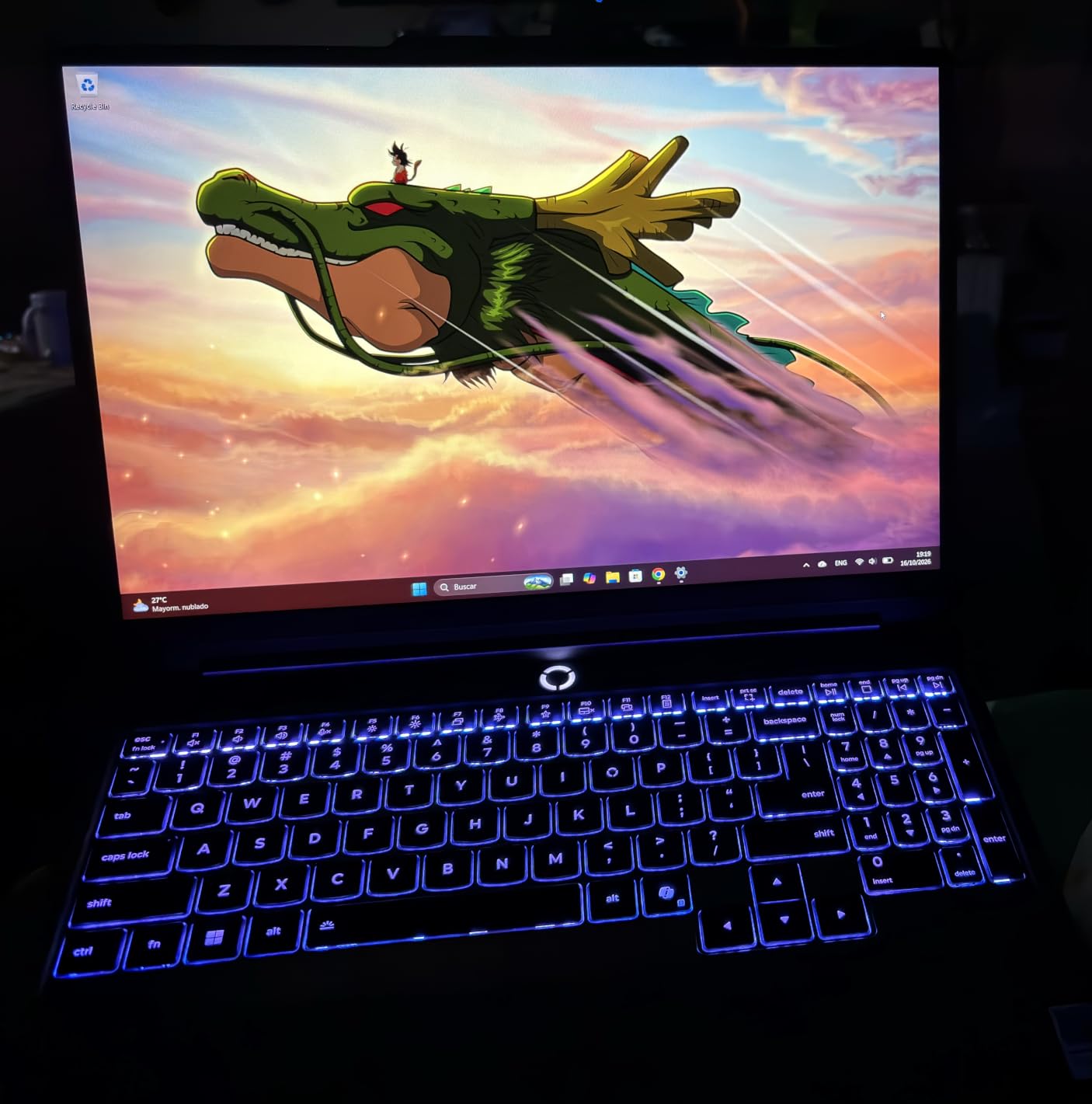
Best Gaming Laptops Under $600 in 2027
I’ll be brutally honest.
In late 2026 and even well into 2027, you are very UNLIKELY to find gaming laptops with a 2050RTX and much less a 3050RTX under 600 dollars. Even with the whole NVIDIA scandal, it isn’t likely to happen.
That was different back in a few years when I first started this post, you could find several 1650GTX and 2050RTX under 600 but now they’re usually 650-720 dollars (in the best case scenario).
My Top Pick for Gaming Laptop Under 600
If you want a dedicated GPU, what options you have under 600 bucks? Two: either get your budget up into the 630s and get a laptop like the one shown below:
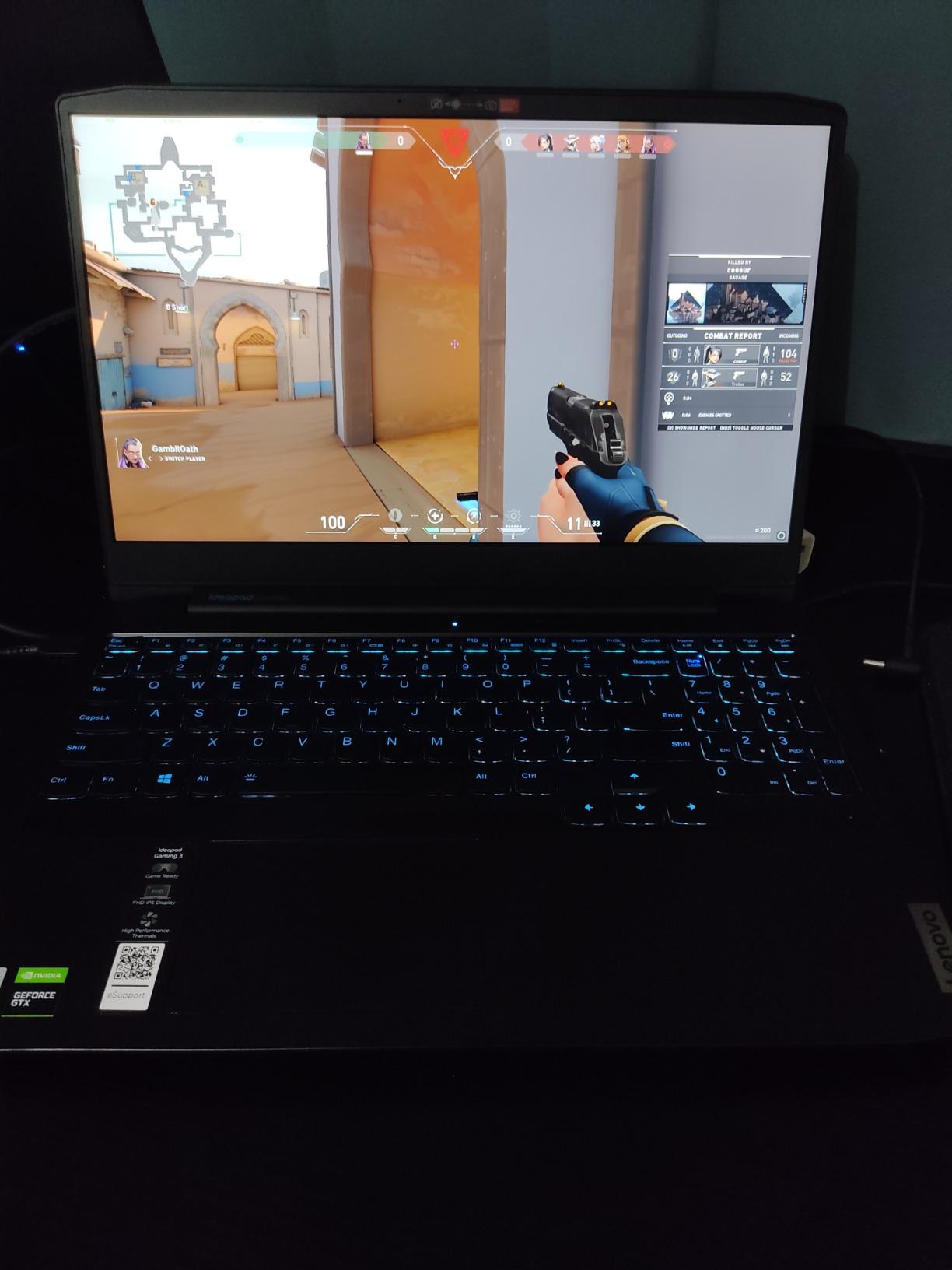
Lenovo IdeaPad Gaming 3
Or get a refurbished laptop with a 2050RTX (which supports RTX features and DLSS unlike the old 1650GTX):
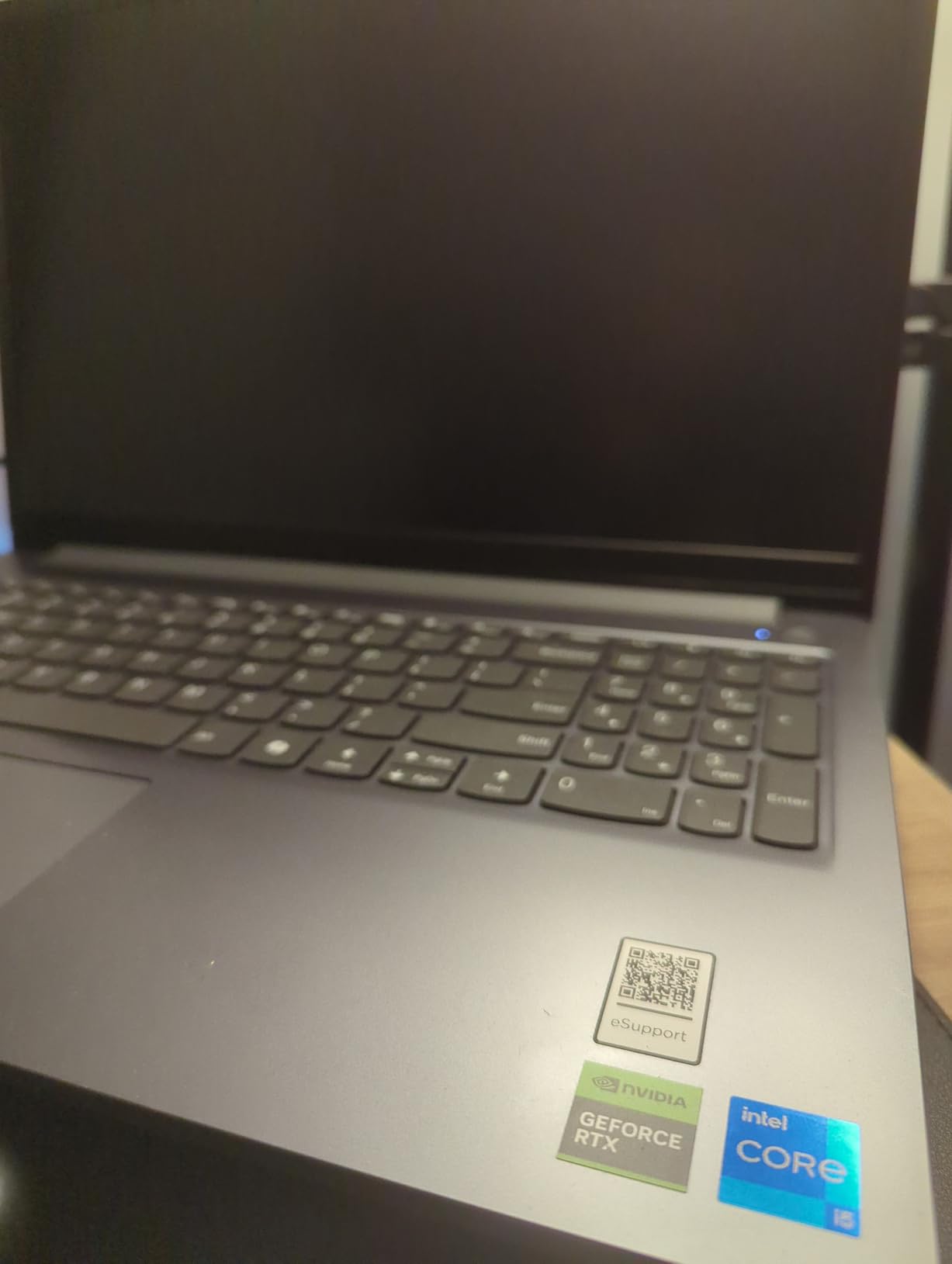
Lenovo LOQ Essential 15.6″ (Renewed)
As for the performance of the 1650GTX and 2050RTX , with DLSS/RTX off, both have similar performance:
- 75 fps on Ultra Settings on Games like WoW.
- 45 fps on High settings on very extremely GPU demanding games like Call of Duty: Warzone
As for the less hardware demanding MOBA games like:
Recommended Specs For Gaming Laptops Under 600
Before we REVIEW these two laptops (with benchmarks) and go over other options let me be more specific about what hardware you should be after and what you’ll find under 600.
GPU
MX450 & MX550: significantly less performance than a 1650GTX but also significantly faster than recent iGPUs. Likely to be found under 600 but these days only found on ‘business’ or ‘premium’ laptops over 750.
1650GTX: Despite being sort of old and non-RTX GPU. It’s very RARE to find it under 600 unless refurbished.
2050RTX: Performance’s similar to the 1650GTX (only SLIGHTLY slower).
Intel Xe & RX Vega 7 + Core i5 or R5: Cheaper alternatives to the MX250 & MX150. When RAM’s 16GB RAM it out performs a GeForce MX250 as shown here. Only worth it if under 500 bucks. For a full benchmark comparison of laptop integrated GPUs, check my post here.
CPU
CPUs don’t make much difference in performance (unless you have an iGPU ). However, if you have the option, choose the fastest for more framerates:
*Not listing Ryzen 7 and Core i7 CPUs because they’re not found under 600.
*Older generation CPUs like 11th, 10th Intel CPUs or 5th and 4th gen Ryzen have significantly less performance.
A full benchmark comparison of current laptop CPUs single and multi-thread performance is shown here.
RAM
8GB: This is as much as you’re going to get for a GAMING laptop under 600. Most games run with this much.
16GB: Ideally, you want this much because there’s a massive performance boost in some games (Ex: CoD). You just have to upgrade whatever laptop you end up with.
iGPU & 16GB RAM: if you’re stuck with an iGPU. 16GB RAM makes HUGE difference to performance (probably a 50% boost in some cases). More details here.
Dual Channel: When upgrading RAM. Make sure it’s in dual-channel mode (if your laptop supports it) as explained in this post. This can boos fps by 5-15 fps.
Storage(SSD)
256GB: This is the most common size under 600. Unfortunately, it’s only enough to store a couple (4-5) AAA games (CyberPunk, CoD, etc).
512-1TBGB: Believe it or not, if you look long enough, it’s not that rare to find these under 600. I’ve found a couple. So buy them before they run out of stock. You can store 10-15 games with this much.
Top 5 Best Gaming Laptops Under $600
This year’s options will be very limited. Prices of 1650GTX and 2050RTX or any ‘entry-level’ or ‘budget GPU’ is much higher than previous years. So I’ll post a mix of refurbished ( under 600), new laptops (slightly over 600) and laptops with integrated graphics (Under 600).
*Also that these laptops are readily available in the United States. For those outside of the US, please check the alternatives or just type the mode’s name at your local store’s websites search bar.
1. Lenovo LOQ Essential RTX 2050
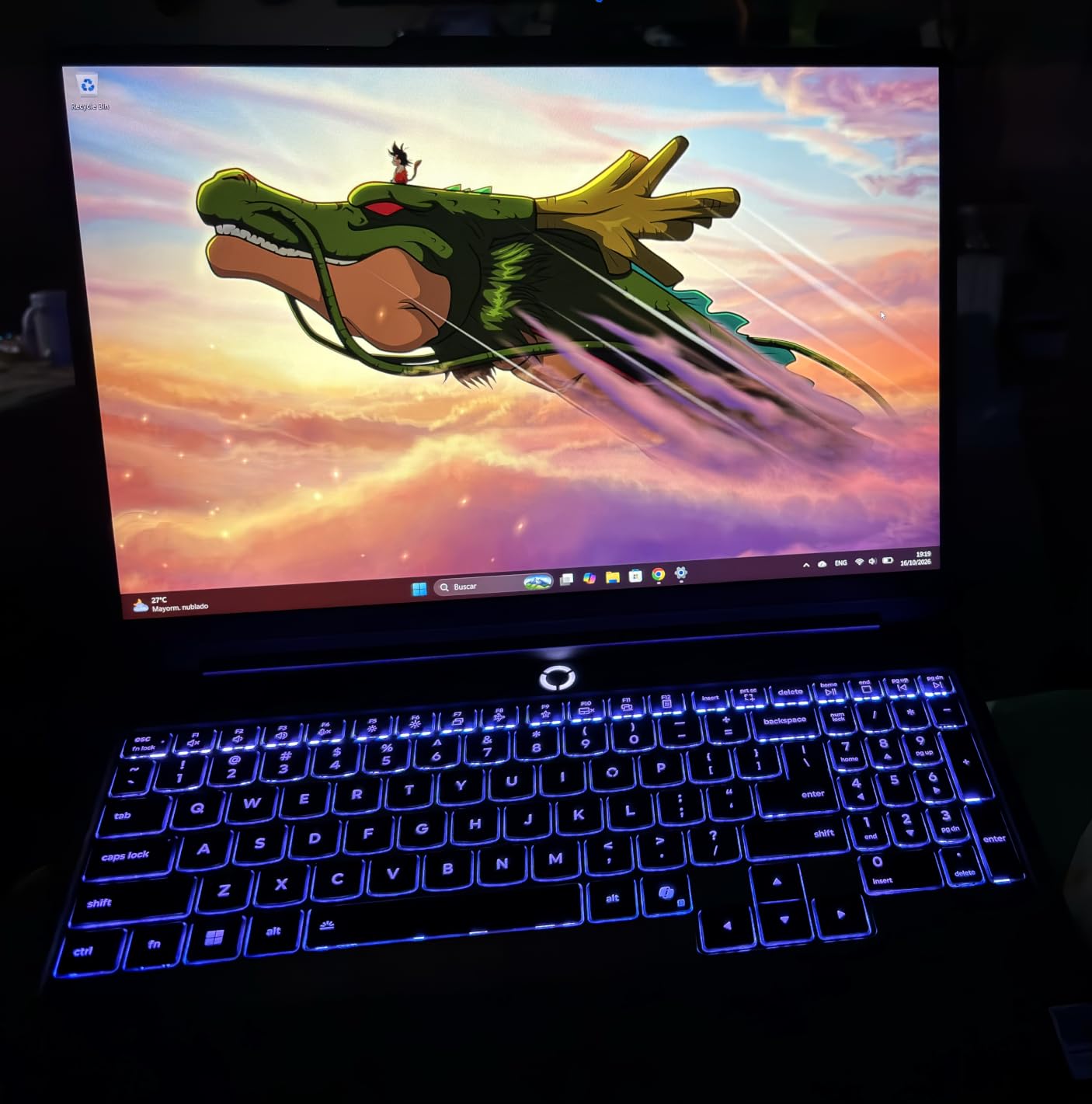
The Best Gaming Laptop Under $600 – RTX 2050
There aren’t many RTX laptops you can actually buy for under $600 anymore, which is why this Lenovo LOQ Essential at around $589 is such an interesting deal. The catch is that this particular listing is Renewed, not brand new, but for the hardware you’re getting I still think it’s one of the better gaming deals around this price.
If you absolutely cannot spend more than $600 and you want an RTX GPU instead of an older GTX 1650, this is basically the type of configuration you should be looking for: Core i5 HX CPU + RTX 2050 + 144Hz display.
GPU: RTX 2050 4GB
The RTX 2050 sits very close to the GTX 1650 in normal rasterized gaming. If you compare the benchmarks between both GPUs, the difference in a lot of games can be surprisingly small.
However, this Lenovo has one BIG advantage over the old MSI GF63 configuration that this review originally used: its RTX 2050 is specified at up to 65W, rather than the low-power 30W configuration used by some ultra-thin RTX 2050 laptops.
That gives the GPU more room to actually use its performance. You still only get 4GB of VRAM, so this isn’t an Ultra-settings AAA monster, but 1080p medium-high gaming is exactly what the RTX 2050 was made for.
You also get DLSS 2, something the GTX 1650 simply doesn’t have. In supported games, DLSS can give you a useful FPS boost without requiring you to drop the output resolution all the way down.
Below is the same RTX 2050 benchmark reference from the previous version of this review. This exact Lenovo can move a little above or below these numbers depending on GPU wattage, temperatures, RAM and the game itself, but the table gives you a good idea of the performance class you’re buying.
[ScrollableTable]
| Game | Framerates | Graphics |
| Valorant | ~151 | High |
| Dota 2 | ~128 | Best Looking |
| PUBG | ~88 | Ultra |
| Farlight 84 | ~220 | Very High |
| Counter Strike 2 | ~90 | High |
| Overwatch 2 | +60 (Fixed) | High Ultra |
| Call of Duty 2 | +43 | Normal High |
| Genshin Impact | +60 (fixed) | High |
| Fortnite | +72 | High |
| GTA V | +47 | Medium |
[/ScrollableTable]
For less graphically demanding competitive games like Valorant, CS2 and Dota 2, you can easily get well above 60fps and in many cases push into the 90-150fps range, which is where the 144Hz display actually becomes useful.
More demanding games like Call of Duty, GTA V or newer AAA titles require more realistic settings. Drop settings to medium or use DLSS when the game supports it and the RTX 2050 becomes much easier to live with.
That’s basically the point of this GPU: 1080p gaming on medium-high settings, not maxing out every graphical option.
CPU: Intel Core i5-12450HX
The CPU is actually one of the better parts of this deal. The Core i5-12450HX has 8 cores (4 Performance + 4 Efficiency cores) and 12 threads, with the performance cores boosting up to 4.4GHz.
That’s more CPU power than you need for an RTX 2050 in most games. In other words, you’re usually going to hit the GPU limit before this CPU becomes the problem.
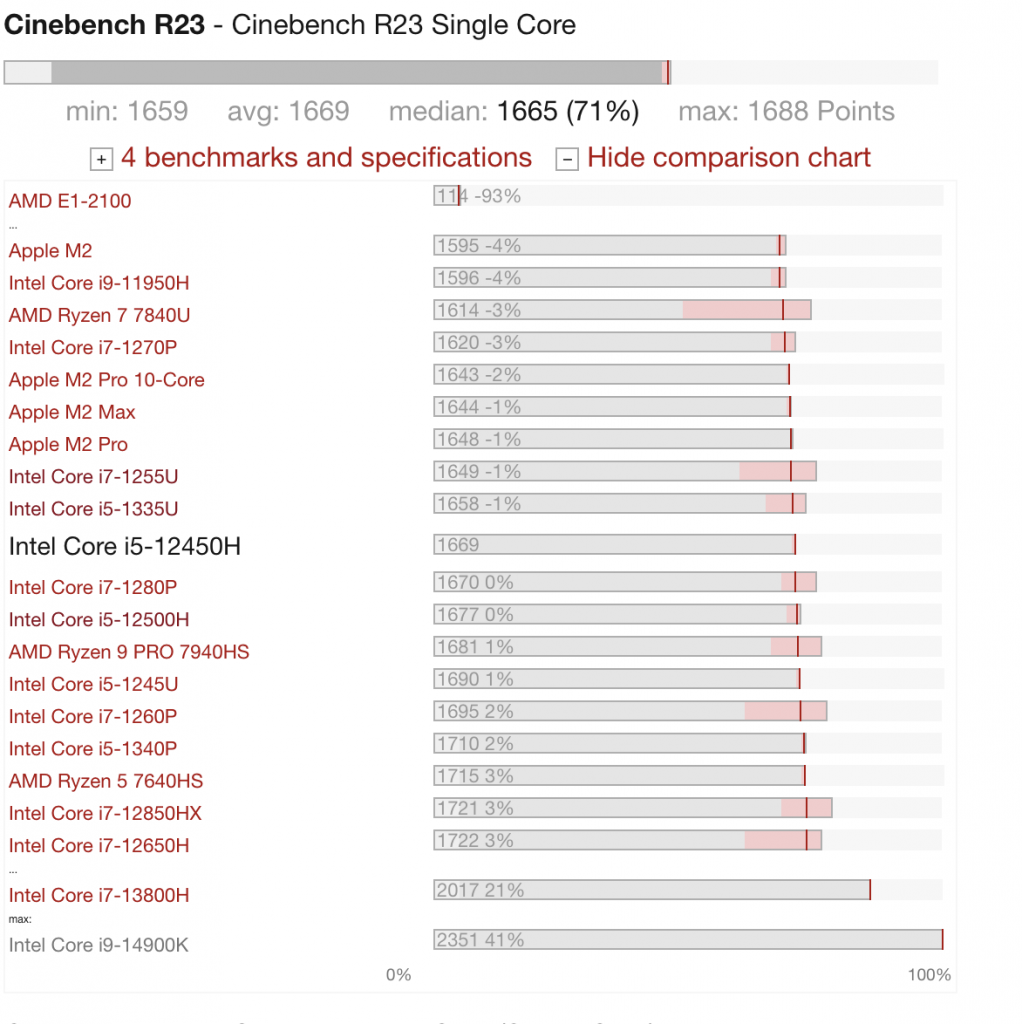
I’m keeping the original Core i5-12450H benchmark graphic below as a rough reference. The 12450HX isn’t exactly the same CPU, but they’re from the same general performance class and the HX version gives this Lenovo plenty of processing power for an entry-level gaming laptop.
RAM & Storage: 8GB DDR5 + 512GB SSD
The old MSI configuration used DDR4. This Lenovo is newer and comes with 8GB DDR5-4800, which is exactly what I’d expect from a current budget gaming laptop.
Eight gigabytes is still the weak point. Windows plus a modern game can use most of that pretty quickly, so if you’re keeping this laptop long term I’d strongly consider moving to 16GB.
One thing to know about the LOQ Essential version is that it only has one DDR5 SO-DIMM slot, rather than the two-slot layout found on the regular LOQ. Lenovo lists support for up to 32GB DDR5-4800 on this chassis. So upgrading means replacing the existing module rather than simply adding another matching stick.
Storage is much better than the old 256GB budget configurations. You get a 512GB PCIe 4.0 NVMe SSD, which is enough to install Windows plus several large games without immediately needing another drive.
144Hz Display
You also get a 15.6-inch 1920 × 1080 IPS 144Hz display. That’s exactly the resolution I’d want with an RTX 2050 because running games at 1080p keeps the workload realistic for this GPU.
The display is actually better than what you often find on cheap gaming laptops too: Lenovo specifies 300 nits and 100% sRGB, so you’re not getting one of those extremely washed-out entry-level panels just because the laptop costs under $600.
Renewed at $589
The reason you’re getting this much hardware for $589 is that this particular listing is renewed. If you absolutely insist on brand new, you’ll probably have to spend more or step down in GPU performance.
But if you’re okay with renewed hardware, this is a MUCH more modern package than the old sub-$600 GTX 1650 laptops: i5-12450HX, 65W RTX 2050, DDR5 RAM, PCIe 4.0 storage and a 144Hz display.
| Lenovo LOQ Essential RTX 2050 | |
| PROS | CONS |
|
|
2. Lenovo IdeaPad Gaming 3
Brand-New Gaming Laptop Around $600
Yes, I know this article is called gaming laptops under $600 and this Lenovo is usually a little over that. The thing is, the price isn’t THAT far from $600 and, more importantly, this one is being sold brand new. If you can stretch the budget a little, I’d rather do that than buy a questionable used gaming laptop just to stay strictly below $600.
It’s going to be pretty difficult for you to find an RTX 2050 under $600 in 2026-2027. If you can’t, which is very likely, a GTX 1650 laptop still makes sense. Raw gaming performance can actually be surprisingly close to a low-powered RTX 2050 laptop, though the RTX 2050 obviously has the advantage of RTX features and DLSS.
GPU: GTX 1650 4GB
The GTX 1650 isn’t an RTX GPU; it belongs to the good ol’ GeForce GTX series. However, it still has 4GB of dedicated VRAM, which is enough for a LOT of 1080p gaming.
The limitation starts showing up with newer games at Ultra settings, but don’t assume every RTX 2050 laptop will automatically destroy a GTX 1650. GPU wattage, RAM configuration, CPU performance and whether Optimus is being used can make the gap surprisingly small.
The GTX 1650 does NOT have Tensor cores, so there’s no DLSS. The RTX 2050 does have that advantage. On the other hand, a GTX 1650 laptop with a MUX Switch or with Optimus bypassed can gain enough performance to compete surprisingly well against some RTX 2050 configurations.
This Lenovo does not give you a MUX switch, so there aren’t any special extra performance gains here. What you get is basically straightforward GTX 1650 gaming performance.
Lenovo IdeaPad Gaming 3: Gaming Performance
The benchmark results below are still a good reference for what the GTX 1650 can do at 1080p. Exact FPS will move up or down slightly with the Core i5-10300H, RAM configuration, drivers and temperatures, but you’re still dealing with the same GTX 1650 performance class.
| Game | Framerates | Graphics |
| Apex Legends | ~63 | High |
| CoD 2 | ~57 | Balanced |
| Valorant | ~154 | High |
| GTA V | ~74 | Ultra |
| Overwatch 2 | +100 | High |
| The Witcher 3 | +66 | Low |
| Genshin Impact | +60 (fixed) | High |
| Forza Horizon | +72 | High |
| Cyberpunk | +32 | Medium |
If you compare these framerates with a typical RTX 2050 laptop, you’ll usually notice that the gap in traditional rasterized gaming isn’t enormous. Depending on the laptop, it can be just a few FPS in some games.
That’s why buying a brand-new GTX 1650 laptop slightly over $600 can still make more sense than paying considerably more for a basic RTX 2050 configuration. You mainly give up DLSS, ray tracing and the newer RTX feature set.
CPU: Intel Core i5-10300H
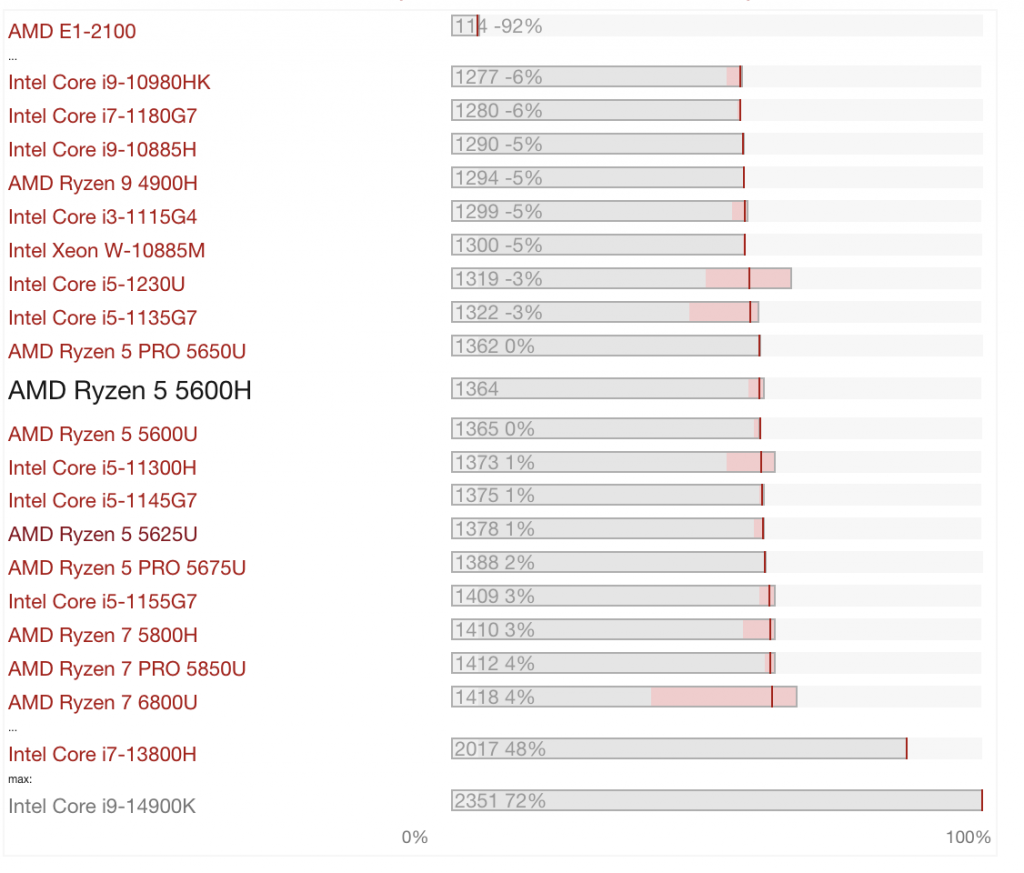
This particular model uses the Core i5-10300H, not the Ryzen 5 5600H that was used in the older version of this recommendation. The i5-10300H is a 4-core / 8-thread H-series CPU with a 2.5GHz base clock and up to 4.5GHz Turbo.
It’s obviously an older CPU now, but paired with the GTX 1650 it’s still fast enough for the type of 1080p gaming this GPU is designed for. In many GPU-heavy games, the GTX 1650 is going to become the limiting factor before the CPU does.
Original CPU comparison graph: I’m keeping the graph from the previous version of this review below for reference, but remember that it shows the older Ryzen 5 5600H comparison. This exact laptop uses the Core i5-10300H.
RAM & Upgrades: 8GB DDR4
One thing I really like about this IdeaPad Gaming 3 chassis is that Lenovo did not make RAM upgrades difficult. There are two DDR4 SO-DIMM slots, so dual-channel memory is supported.
This model only comes with 8GB DDR4, so RAM is one of the first upgrades I’d consider. Moving to 16GB and running dual-channel memory can help overall responsiveness and can also improve performance in games that are sensitive to memory bandwidth.
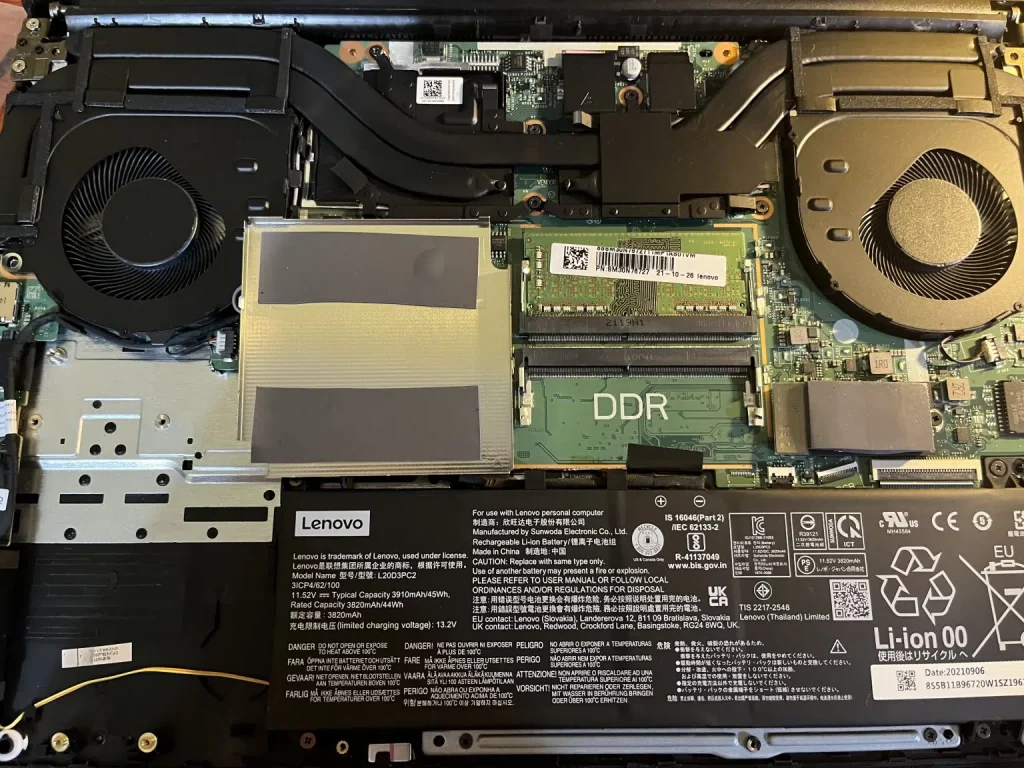
The exact Intel version uses DDR4-2933 memory. The chassis also supports an M.2 SSD plus a 2.5-inch drive, so the small 256GB SSD isn’t as big of a problem as it first looks. You can add more storage later instead of replacing the entire laptop.
| Lenovo IdeaPad Gaming 3 | |
| PROS | CONS |
|
|
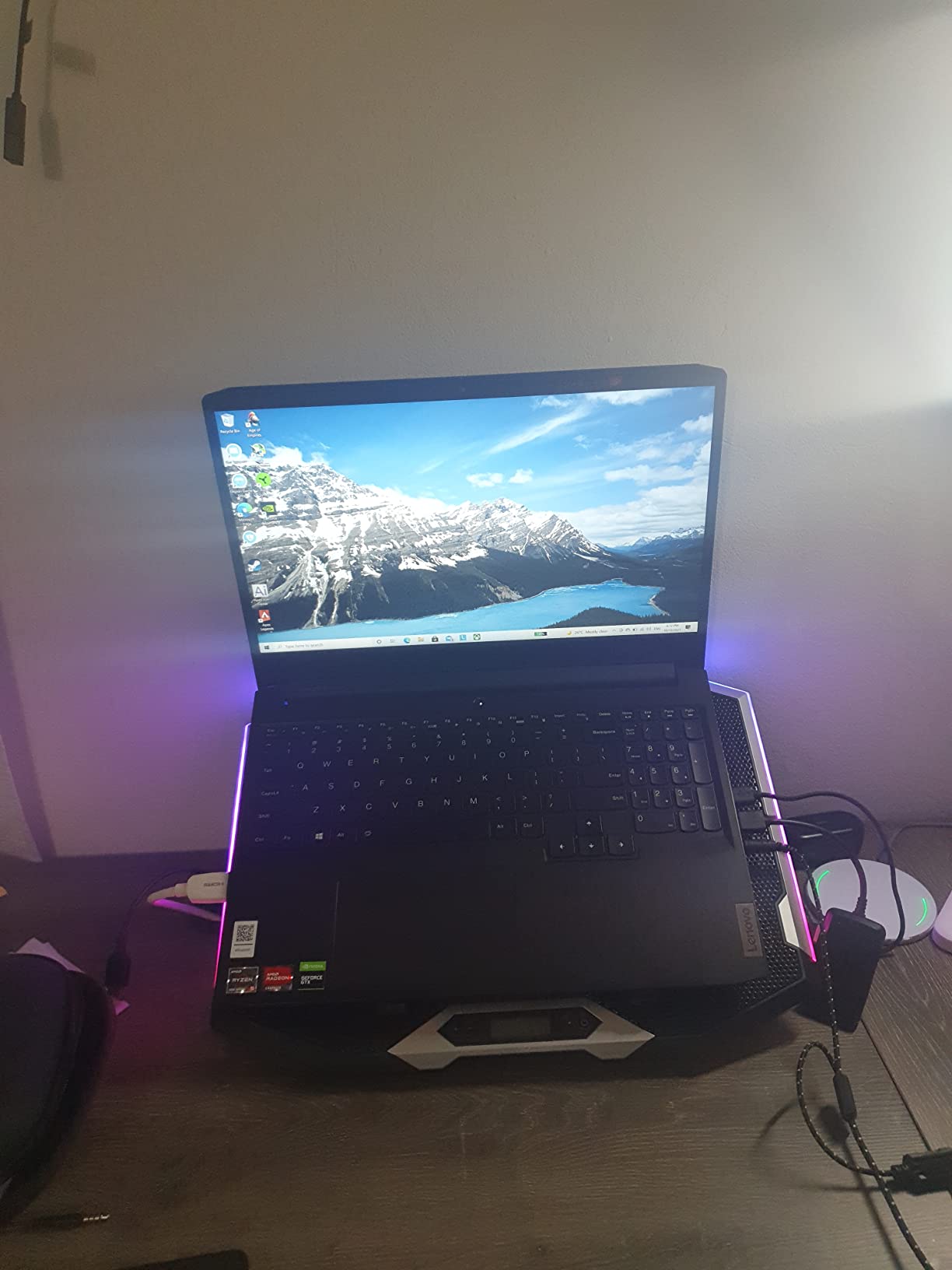
3. Lenovo IdeaPad Gaming 3 GTX 1650 Ti
GTX 1650 Ti Gaming Laptop Around $600
This Lenovo IdeaPad Gaming 3 is slightly more expensive than the RTX 2050 Lenovo LOQ above, but you’re getting a very different configuration. Instead of an RTX 2050, this model uses the older but still surprisingly capable GTX 1650 Ti, while giving you 16GB RAM and a massive 512GB SSD + 1TB HDD right out of the box.
If you’re trying to stay as close as possible to $600, I’d probably take the RTX 2050 LOQ first. But if this Lenovo isn’t much more expensive when you check the price, the extra RAM and storage make it a very interesting alternative.
GPU: GTX 1650 Ti 4GB
The important detail here is the Ti. This isn’t the regular GTX 1650 used by most of the older gaming laptops we’ve discussed. It’s the GTX 1650 Ti with 4GB GDDR6 VRAM.
The GTX 1650 Ti sits above the regular GTX 1650 in raw GPU performance, although we’re still talking about the same general class of 1080p gaming laptop. You don’t get RTX features or DLSS because this is still a GTX GPU, but for normal rasterized gaming the performance remains surprisingly good.
I’ve actually reviewed and benchmarked this same Ryzen 5 + GTX 1650 Ti configuration on my YouTube channel, so you don’t have to rely entirely on synthetic GPU comparisons:
The benchmark results below give you a good idea of what this hardware can do at 1080p:
[ScrollableTable]
| Game | Framerates | Graphics |
| Valorant | ~144 | High |
| PUBG | ~56 | Ultra |
| Cyberpunk | ~34 | Medium |
| Forza Horizon 5 | ~82 | High |
| GTA V | +72 | Ultra |
| The Witcher 3 | +52 | High |
| Warzone | +72 | Normal/Low |
| Watch Dogs: Legion | +49 | Medium |
| Assassin’s Creed | +50 | Medium |
[/ScrollableTable]
As you can see, competitive games are where this laptop really shines. Valorant at around 144fps lines up nicely with the 120Hz display, while games such as GTA V and Forza Horizon can still run comfortably above 60fps at high or ultra settings.
Once you move into something much heavier like Cyberpunk, you’re looking at roughly 30-40fps unless you start dropping settings. That’s normal for this GPU class. The GTX 1650 Ti is still meant primarily for 1080p medium-high gaming, not maxing out every modern AAA game.
CPU: AMD Ryzen 5 4600H
The Ryzen 5 4600H is older now, but don’t underestimate it. It’s a 6-core / 12-thread H-series CPU, which is still a very good match for the GTX 1650 Ti.
One reason I’ve always liked this particular configuration is that the Ryzen 5 4600H has strong multi-core performance. Games that can actually make use of several cores and threads can perform surprisingly well despite the age of the processor.
The newer Core i5 CPUs found on the RTX 2050 laptops above are faster overall, but in practice the GTX 1650 Ti is going to become the limitation in most graphically demanding games before the Ryzen 5 4600H does.
RAM: 16GB
This is one of the best things about this particular listing. Instead of getting another budget gaming laptop with only 8GB RAM, you’re starting with 16GB.
That’s already the amount I’d recommend for gaming in 2026-2027. You don’t immediately have to open the laptop and buy another RAM stick just to get comfortable performance in newer games or while multitasking.
Storage: 512GB SSD + 1TB HDD
Storage is another HUGE advantage over most laptops around $600. You get a 512GB SSD plus a 1TB HDD, giving you roughly 1.5TB of total storage.
Install Windows and the games you play most often on the SSD, then use the 1TB hard drive for less frequently played games, videos, installers and other large files.
Compare that with the 256GB and 512GB-only laptops above and you can see why spending a little more here isn’t necessarily wasted money. You’re already getting the storage upgrade included.
120Hz Display
The 15.6-inch 1920 × 1080 IPS 120Hz display is also exactly what I’d want for this GPU.
There’s no reason to push a GTX 1650 Ti into a 1440p display. At 1080p, you can keep settings higher and still get good framerates, while the 120Hz refresh rate actually lets you see the extra FPS in competitive games such as Valorant.
Is It Worth Paying More?
This model is a little more expensive than the cheaper laptops above, so I wouldn’t automatically buy it just because it says GTX 1650 Ti.
What makes the extra money easier to justify is the entire configuration: GTX 1650 Ti + Ryzen 5 4600H + 16GB RAM + 512GB SSD + 1TB HDD + 120Hz IPS display.
If the price difference is small and you value the extra RAM and storage, I’d take this configuration seriously. If you mainly care about getting the newest GPU features such as DLSS, however, spend the money on the RTX 2050 Lenovo LOQ instead.
| Lenovo IdeaPad Gaming 3 GTX 1650 Ti | |
| PROS | CONS |
|
|
4. HP Victus 15-fa2013dx RTX 3050
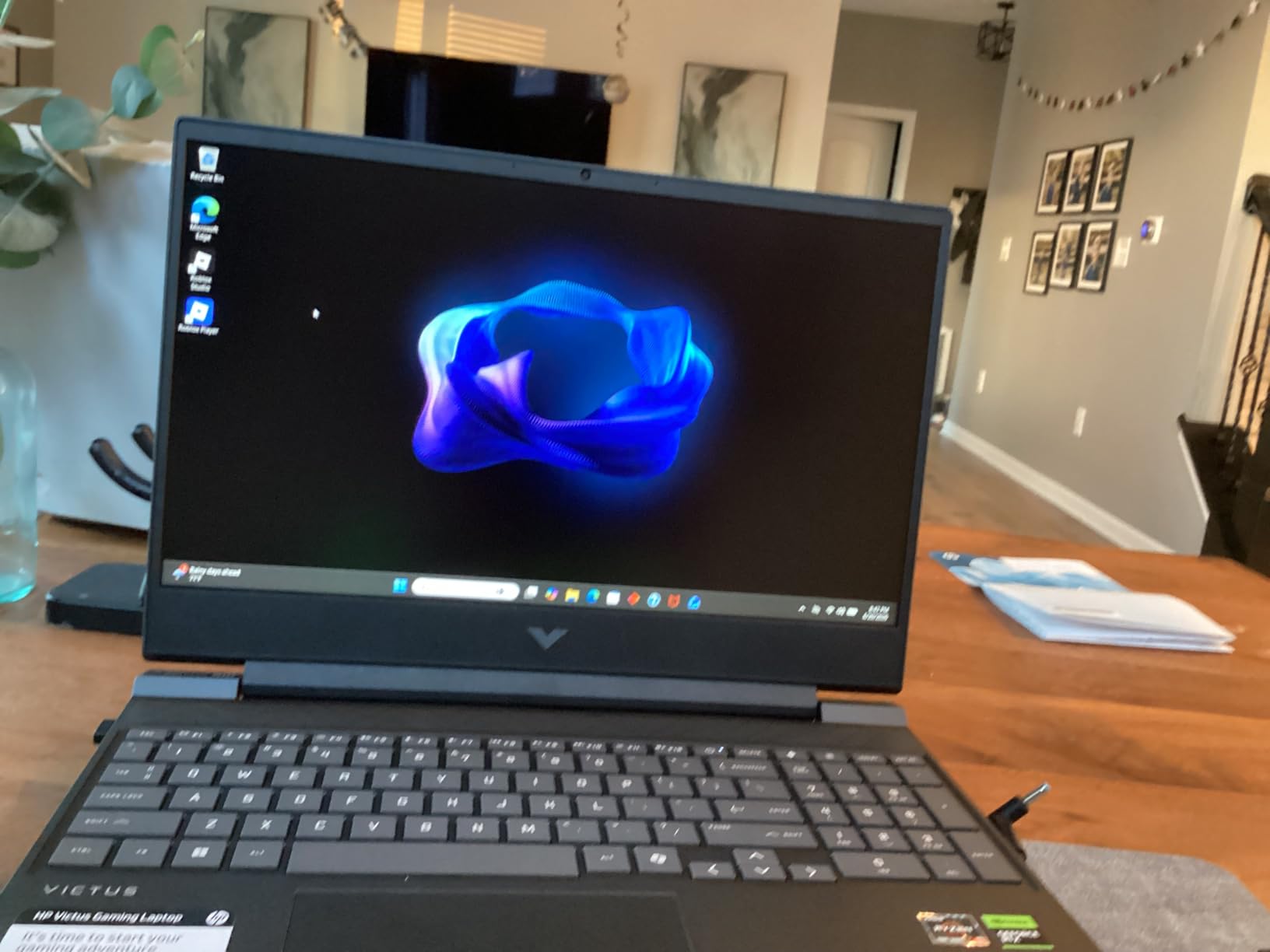
Cheapest RTX 3050 Gaming Laptop in 2026 – Renewed ~$699
This is the most powerful laptop on the list, but unlike the older model I used to recommend here, you’re not going to find a new RTX 3050 gaming laptop anywhere near $600 anymore. In 2026, the usual price for an RTX 3050 laptop is around $750-$850, and even the cheapest new RTX 3050 models I’ve found start at roughly $750.
This particular HP Victus is interesting because the renewed version sells for around $699. That makes it about the cheapest way I’ve found to get an RTX 3050 laptop in 2026 without jumping all the way up to the price of newer RTX 4050/5050 gaming laptops.
GPU: RTX 3050 6GB
This is the 6GB version of the RTX 3050. Older RTX 3050 laptops generally had only 4GB vRAM, so the extra 2GB gives you more room when using higher texture and graphics settings. Since vRAM is also significantly higher than what you get on the GTX 1650 and RTX 2050 laptops discussed earlier, this is a much better GPU for demanding games.
It’s also an RTX GPU, which means you get Tensor cores and support for DLSS. Ray tracing is technically supported too, although I wouldn’t buy an RTX 3050 specifically for ray tracing. In demanding games, the GPU simply doesn’t have enough performance to use heavy ray tracing settings while maintaining good framerates.
RTX 2050 vs RTX 3050
Unlike the RTX 2050, the RTX 3050 can run at considerably higher wattages. That’s important because you may come across YouTube benchmarks where both GPUs appear surprisingly close. That’s mostly true when the RTX 3050 is restricted to roughly the same low wattage as the RTX 2050.
Wattage
The RTX 2050 is generally limited to much lower power levels. If an RTX 3050 is also forced to run at very low wattage, the performance difference can shrink quite a bit. Once the RTX 3050 is allowed to use more power, however, it can maintain higher clock speeds and push noticeably more frames.
Let’s check out some benchmarks of an RTX 3050 laptop with essentially the same class of hardware:
[ScrollableTable]
| Title | fps(avg) | Graphics (FHD) |
| Valorant | ~204 | High |
| CS:GO | ~186 | High |
| Fortnite | ~66 | Epic |
| Forza Horizon | ~97 | High |
| Warzone | ~40 | High |
| Overwatch | ~113 | Epic |
| LoL | ~250 | Very High |
| Red Dead Redemption 2 | ~43 | Ultra |
| The Witcher 3 | ~65 | High |
| Horizon Zero Dawn | 42 | Favor Quality |
[/ScrollableTable]
It takes no genius to see that there’s a HUGE performance difference between the RTX 3050 and the previous GTX 1650 and RTX 2050 laptops. Most games are actually able to run at Ultra with decent framerates around the 40fps mark, while High settings will usually get you considerably closer to or above 60fps.
This is the kind of GPU power you’d want for titles like The Witcher 3 and Red Dead Redemption 2. Competitive games are obviously much easier to run, with games like Valorant and League of Legends pushing well beyond 144fps.
CPU: Core i5-13420H
The benchmark above was taken with essentially the same hardware except the CPU was a Core i5-12450H. This HP Victus uses the newer Core i5-13420H.
Both are 8-core / 12-thread H-series CPUs, but the Core i5-13420H has slightly higher clock speeds. Don’t expect the GPU-heavy games in the table to suddenly jump massively in performance, but the newer CPU is definitely an upgrade and can help more noticeably in competitive games pushing very high framerates.
RAM: 8GB
This configuration comes with 8GB RAM. That’s enough to get started, but this is one area where I’d strongly recommend an upgrade. In 2026, 16GB is the sweet spot for gaming, especially if you want to keep Discord, a browser or other programs running in the background.
The good news is that HP Victus gaming laptops are upgradeable, so you aren’t permanently stuck with 8GB. Moving to 16GB also lets you take better advantage of dual-channel memory if the laptop is currently running a single 8GB module.
Storage: 512GB SSD
You get a 512GB SSD out of the box. That’s pretty standard for gaming laptops in this price range and enough for Windows plus several large games, although you’ll probably want more storage eventually if you keep a large game library installed.
144Hz Display
The 15.6-inch FHD 144Hz display is a great match for the RTX 3050. There’s really no reason to pair this GPU with a higher-resolution panel when its sweet spot is still 1080p gaming.
The 144Hz refresh rate is particularly useful for the competitive games in the benchmark above. Valorant, CS:GO and League of Legends can all push well beyond 100fps, so unlike a regular 60Hz display, you’ll actually be able to see a lot of those extra frames.
Renewed vs New RTX 3050 Laptops
The main catch here is obviously that this particular listing is renewed. If you absolutely want a brand-new gaming laptop, the cheapest new RTX 3050 models I’ve seen in 2026 are roughly $750, with most sitting closer to $750-$850.
At around $699 renewed, this HP Victus makes more sense for someone trying to get the most GPU performance possible while keeping the price down. You’re basically saving around $50 versus even the cheapest new RTX 3050 laptops and potentially quite a bit more compared with the typical models.
| HP Victus 15-fa2013dx RTX 3050 | |
| PROS | CONS |
|
|
5. Lenovo IdeaPad 5i
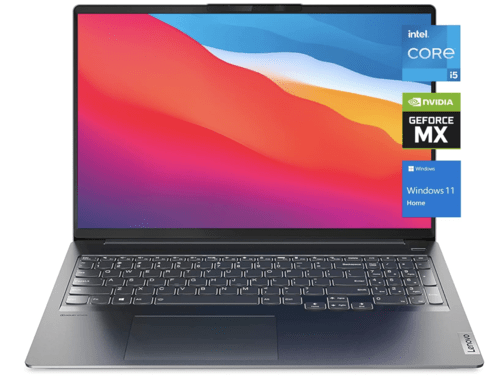
MX450 Gaming Laptop – QHD & Lightweight
This is the weakest laptop on the list. It’s pretty close to $600 too, so it makes you wonder what’s the point?
Well, it’s VERY portable, has a decent battery life and is STILL capable of gaming, meaning you can play games at medium and sometimes high settings with decent framerates. Since it’s portable, you can take it to school or work too.
One important thing to know in late 2026: it’s almost 2027 and laptops with the MX450 are now very, very hard to find brand new. Amazon mostly has refurbished or renewed models left. If you’re specifically looking for an MX450 laptop, you’re better off checking Lenovo’s official site, other manufacturer websites and other retailers as well. A brand-new model in good condition should probably cost over $600 at this point simply because there aren’t many of them left.
Let’s check out the performance before we talk about the other stats since that’s what we’re all interested in first: gaming.
GPU: MX450 2GB vRAM 25W
| Title | fps(avg) | Graphics (FHD) |
| Fortnite | ~105 | Low |
| Red Dead Redemption 2 | ~34 | Low |
| The Witcher 3 | ~37 | Medium |
| GTA V | ~94 | Normal |
| Forza Horizon 4 | ~58 | Medium |
| Warzone | ~48 | Low |
| Far Cry 5 | ~44 | Low |
| Valorant | ~185 | High |
| Battlefield V | ~54 | Low |
You can get decent framerates across all games as long as you adjust settings to Low or Medium. In fact, if you lower settings and change the resolution to 720p, your framerates will be higher. The most graphically demanding games are usually action RPGs like The Witcher, where framerates as low as 30 don’t matter as much, so you can keep the settings higher.
Whereas in online FPS games like Valorant, Fortnite & Warzone, framerates are VERY important. This laptop easily hits 100fps in lighter titles with lower settings. Warzone’s framerates are still quite low even on Low settings though, so that’s one game I’d probably avoid playing on this GPU.
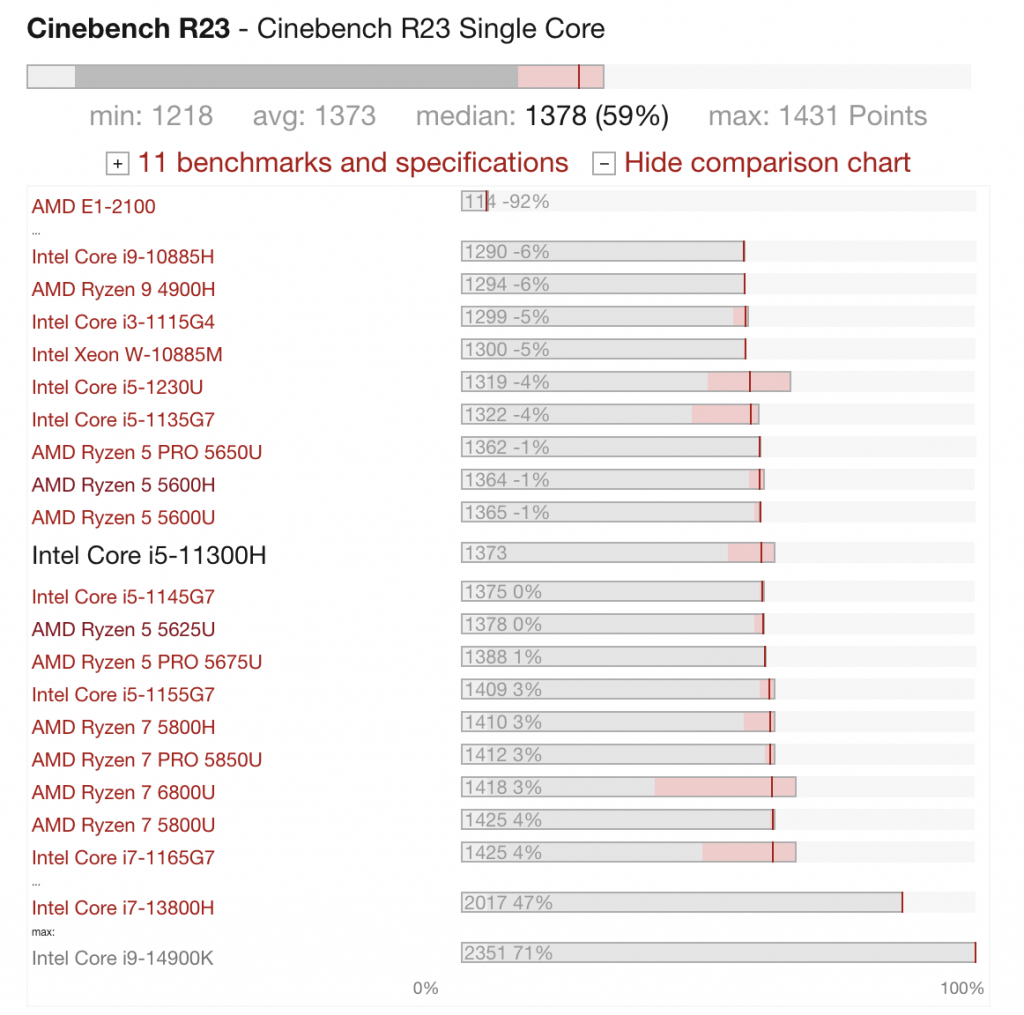
CPU: Core i5-11300H vs Intel Core i5-1135G7
The laptop tested in the benchmark had a Core i5-1135G7 and most MX450 laptops either have that or a Ryzen 5 5500U (or another lower-generation U-series low-voltage CPU). The laptop shown here has an H-series CPU, which is designed more towards gaming. It has a higher base clock speed and higher Turbo Boost, with a maximum clock speed of 4.4GHz, which is 200MHz higher than the Core i5-1135G7.
RAM Storage & Upgrades
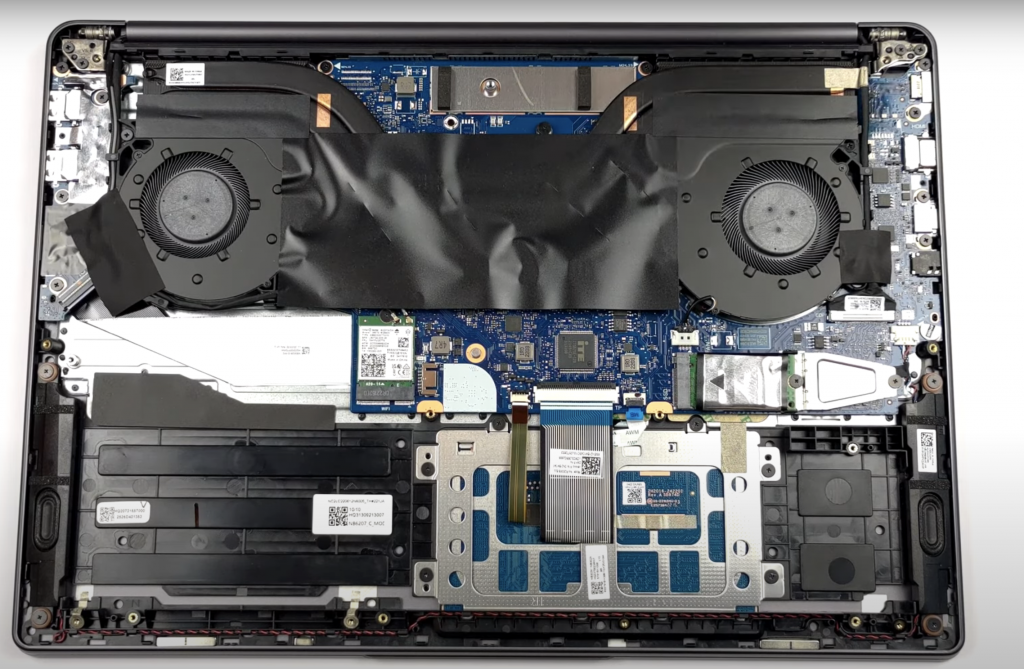
The Lenovo IdeaPad 5i Pro RAM & Storage setup is different from the other Lenovo IdeaPad 3. Unfortunately, the RAM is soldered to the motherboard, so you’re stuck with whatever you get at the time of purchase. There’s no extra RAM slot. It’s DDR4 3200MHz.
As for storage, there’s only ONE storage slot available and it’s the one used by the default storage. So you cannot add an additional SSD. You can replace the default storage with a 1TB SSD, but you’d have to reinstall Windows and all of the programs that come out of the box. You can also use cloning software, if you have another computer available, to copy the contents of the original drive to the new SSD.
[ScrollableTable]
| Lenovo IdeaPad 5i | |
| PROS | CONS |
|
|
How to Find The Best Gaming Laptop Under 600
As we’ve been doing with our best gaming laptop under XXX series posts, this section is supposed to teach you how to add up all the laptop hardware & parts to the total price so you can compare it to the retail price and see if it’s a good deal.
This cannot really be done for gaming laptops under 600 because laptop CPUs & graphics cards do not have set retail prices when sold inside laptops. Their prices also vary massively depending on the laptop model, cooling system, GPU wattage and current sales.
The best way to go about this is by simply making a list of all laptops with a dedicated GPU you find under 600. Of course, if you find any outliers (say an RTX 4050 or RTX 5050) which are not normally found under 600, then it’s obviously a good deal. For all other laptops (RTX 2050, RTX 3050 and older GPUs), a list will help you get the absolute best bang for your buck.
Going into 2027, I’ve made a list consisting of all WORTHY laptops under 600. I’ve omitted most laptops with weak integrated GPUs and laptops that are OBVIOUSLY overpriced for the dedicated GPU they have (older MX, GTX and low-end Radeon GPUs).
What follows next are just tips on how to go about finding the best gaming laptop under 600 on your own. This is the kind of stuff you learn once you look at several hundred laptops and research their performance.
GPU
As you probably know, you must prioritize finding a laptop with a dedicated GPU. Otherwise, if gaming is your main goal, you’re giving up a massive amount of performance.
Dedicated
Going into 2027, if you find an RTX 5050 or RTX 4050 at or below 600 dollars, you need to start seriously considering that laptop immediately. Both can occasionally drop to the $599 range during major sales, but these are still unusually good deals.
You’ll more commonly find RTX 3050 and RTX 2050 laptops around this budget. GTX 1650, MX series and similar GPUs should only be considered if the laptop is significantly cheaper.
Below are the typical price ranges you’ll see for laptops with these GPUs going into 2027. The next column tells you roughly the MAXIMUM price I would personally pay for each GPU if gaming performance is your priority.
| Price Range | Max Price | Graphics | |
| 5050RTX | $599-900 | $600 | High-Ultra |
| 4050RTX | $550-800 | $600 | High-Ultra |
| 3050Ti | $450-600 | $500 | High |
| 3050RTX | $450-650 | $525 | High |
| 2050RTX | $400-550 | $450 | Med-High |
| 1650GTX | $350-500 | $400 | Medium |
| MX550 | $350-500 | $400 | Low-Med |
| MX450 | $300-450 | $350 | Low-Med |
| Radeon RX 555X | $250-400 | $300 | Low |
| Radeon RX 540 | $250-400 | $300 | Low |
| Radeon RX 550 | $250-400 | $300 | Low |
MX Series, Old GTX & RX Series: These laptops are not as powerful as the newer RTX GPUs. Some can still outperform basic integrated graphics, but going into 2027 you should only consider them when they’re MUCH cheaper or you’re buying a very portable/refurbished gaming laptop.
Integrated
Integrated GPUs should generally be avoided if your budget is close to 600 dollars because RTX 3050, RTX 4050 and even occasional RTX 5050 deals are now possible around this price.
If your budget is lower, however, newer integrated GPUs are much better than they used to be. The important thing is to look at the actual iGPU inside the CPU rather than simply buying the fastest CPU name you can find.
| GPU | CPU | Equiv. | Max. Price |
| Intel UHD Xe G4 | Core i3 1115G4 | — | $300 |
| Intel UHD 64EUs | Core i3 1215U | — | $350 |
| Intel UHD 64EUs | Core i3 1305U | — | $350 |
| Intel Iris Xe 80 | Core i5 1135G7 | MX250 | $350 |
| Intel Iris Xe 80EUs | Core i5 1230U | MX330 | $400 |
| Intel Iris Xe 80EUs | Core i5 1345U | MX330 | $450 |
| Intel Arc Graphics | Core Ultra 5 125H | Entry dGPU-class | $500 |
| Intel Arc 130T | Core Ultra 5 225H | Entry dGPU-class | $600 |
| RX Vega 6 | Ryzen 3 5300U | — | $300 |
| Radeon 610M | Ryzen 3 7320U | — | $300 |
| RX Vega 7 | Ryzen 5 5500U | MX250 | $350 |
| Radeon 610M | Ryzen 5 7520U | —- | $350 |
| Radeon 760M | Ryzen 5 8645HS | Entry dGPU-class | $500 |
| Radeon 760M | Ryzen 5 240 | Entry dGPU-class | $550 |
| Radeon 780M | Ryzen 7 8845HS / Ryzen 7 260 | Entry dGPU-class | $600 |
One important change going into 2027 is that AMD is no longer automatically the weaker option for integrated graphics. Newer Radeon 760M and 780M iGPUs are significantly faster than the old Vega and Radeon 610M graphics. Intel’s newer Core Ultra CPUs with Arc graphics are also much faster than the old Intel UHD and Iris Xe chips. So if gaming is your priority, look at the exact integrated GPU rather than choosing Intel or AMD based on the brand alone.
CPU
Assuming you find two laptops with the exact same GPU, the next most important piece of hardware is the CPU.
Below are CPUs commonly found on budget gaming laptops around this price range. I’ve mostly omitted Core i7, Core Ultra 7, Ryzen 7 and higher-end CPUs because the GPU should still take priority when your total budget is only 600 dollars.
CPUs For integrated GPUs
For integrated graphics, do not choose the CPU based on Core i5 vs Ryzen 5 alone. Look at the actual iGPU. A Ryzen 5 with Radeon 760M can be much better for gaming than another newer CPU with weak Radeon 610M or basic Intel Graphics.
CPUs For dedicated GPUs
Use the following table:
| Intel | Base | Turbo | Cores/Threads |
| i5 10300H | 2.5 | 4.5 | 4/8 |
| i5-11300H | 3.1 | 4.4 | 4/8 |
| i5 11260H | 2.6 | 4.4 | 6/12 |
| i5 11400H | 2.7 | 4.5 | 6/12 |
| i5 12450H | 2.0 | 4.4 | 8/12 |
| i5 12500H | 2.5 | 4.5 | 12/16 |
| i5 13420H | 2.1 | 4.6 | 8/12 |
| i5 13500H | 2.6 | 4.7 | 12/16 |
| i5 14450HX | 2.4 | 4.8 | 10/16 |
| Core 5 210H | 2.2 | 4.8 | 8/12 |
| Ryzen | Base | Turbo | Cores/Threads |
| Ryzen 5 4600H | 3.0 | 4.0 | 6/12 |
| Ryzen 5 5600H | 3.3 | 4.2 | 6/12 |
| Ryzen 5 6600H | 3.3 | 4.5 | 6/12 |
| Ryzen 5 7535HS | 3.3 | 4.55 | 6/12 |
| Ryzen 5 8645HS | 4.3 | 5.0 | 6/12 |
| Ryzen 5 240 | 4.3 | 5.0 | 6/12 |
Same color means roughly equivalent in performance.
Performance will depend on the game, and modern CPUs are more complicated than simply comparing clock speeds or core counts. Once you have a decent Core i5, Core 5 or Ryzen 5 paired with a dedicated GPU, the GPU will usually make a much bigger difference at this budget. In other words, do not sacrifice an RTX 4050 or RTX 5050 just to get a slightly faster CPU.
RAM
8GB RAM
8GB can still run many games, but going into 2027 I would consider it the bare minimum rather than the ideal amount. If a cheap gaming laptop comes with 8GB, make sure the RAM can be upgraded.
16GB
This is now the gold standard for gaming, especially if you’re playing graphically demanding games like Cyberpunk 2077, Call of Duty or newer AAA releases.
Modern Games
As games become more demanding, 16GB gives you much more breathing room for the game itself, Windows and background applications. For most people buying a gaming laptop in 2027, 16GB should be the target.
Integrated GPUs
If you have an integrated GPU, having 16GB RAM is even more important. Integrated graphics use system memory instead of having their own dedicated vRAM, so memory capacity and bandwidth can have a significant effect on gaming performance.
Why?
Part of your system RAM is shared with the integrated GPU. This does not literally turn the extra RAM into dedicated vRAM, but having enough memory available and a fast memory configuration prevents the iGPU from being unnecessarily bottlenecked.
Dual Channel
Regardless of the GPU you have, you can sometimes push framerates higher by using a proper dual-channel memory configuration. I have a dedicated post on the dual-channel RAM topic, but basically this means using two compatible RAM modules so the CPU and GPU have more memory bandwidth available. This is especially important for integrated graphics.
DDR5 vs DDR4
Going into 2027, DDR5 is now very common on new gaming laptops, even in the budget category. DDR4 is mostly found on older models and refurbished laptops. DDR5 is a nice bonus, especially for integrated graphics, but you should still prioritize the GPU first. An RTX 4050 laptop with DDR4 is a much better gaming deal than a weaker GPU just because the laptop has DDR5.
Storage
SSD vs HDD
SSDs (Solid State Drives) are virtually universal on modern laptops. HDDs are now obsolete as primary laptop storage and are mostly found on very old or refurbished machines. SSDs don’t normally increase average gaming FPS, but the difference in Windows responsiveness, boot times and game loading times is SIGNIFICANT.
TL;DR: You must avoid HDDs as your primary drive.
SSD Type: PCIe NVMe vs SATA III SSD
Virtually every modern gaming laptop now uses a PCIe NVMe SSD as the primary drive. SATA III SSDs are mostly found in older laptops or used as additional storage. Either way, if you upgrade an older laptop and add a SATA SSD, gaming FPS will be almost identical. The main difference will be transfer and loading speeds.
For 2027, 512GB should be considered the minimum comfortable storage size for a gaming laptop. A 1TB SSD is a big plus because modern games can easily take up 100GB or more each.
Display
Refresh Rates: 60Hz, 120Hz, 144Hz, 165Hz & 180Hz
Going into 2027, most proper gaming laptops with an RTX 2050, RTX 3050, RTX 4050 or RTX 5050 come with at least a 120Hz or 144Hz display. 165Hz and even 180Hz panels are also becoming common on newer budget gaming models.
60Hz is now mostly found on regular laptops with integrated graphics or older low-tier gaming laptops. If two gaming laptops have similar hardware and price, always take the high-refresh-rate display.
FHD IPS vs QHD IPS
FHD or FHD+ IPS displays are still pretty much the standard on gaming laptops under 600. QHD displays are possible at higher budgets but remain very rare this low. That’s not really a problem because FHD is a much better match for budget GPUs if your goal is high framerates.
An RTX 4050 or RTX 5050 can certainly run some games at QHD, especially with DLSS, but for demanding games at high settings you’ll usually get a much better experience sticking to 1080p or 1200p and taking advantage of the laptop’s high-refresh-rate display.
Comments?
Please, if you have any questions or concerns, leave a comment below. I will try to reply as soon as possible!
